 Bolli Automation specializes in vision dispensing machines_factory direct


Bolli focuses on Vision Fluid
BOLI, FOCUS ON VISION‑BASED FLUID DISPENSING
Search All
BOLI, FOCUS ON VISION‑BASED FLUID DISPENSING
Bolli Automation dispensing technology column, continuously updating vision dispensing machine selection, parameter debugging, glue valve matching, takt calculation, defect troubleshooting, etc. practical dry goods, helping electronics manufacturing engineers avoid detours, sharing source-factory frontline experience.
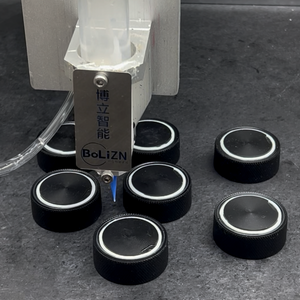
first-piece confirmation must be redone after vision dispensing machine model change, material change, parameter adjustment, or restart after machine shutdown. verify in five steps by program version, material, fixture, process parameters, and product measurement; release with sign-off under the three-inspection system; retain qualified first-pieces as samples until the end of the batch as a comparison baseline.
Read full article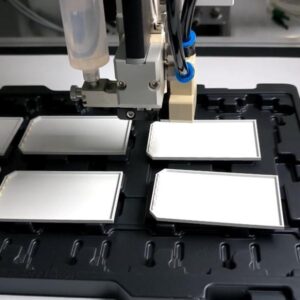
Plasma treatment removes oil film and grafts polar groups, raising PP, PE and other low surface energy plastics above the 40–42 mN/m required for adhesive bonding. Dyne pen quick screening and contact angle spot-check; transfer to the dispensing process within 4–8 hours after treatment; treat-and-dispense to avoid time-decay.
Read full article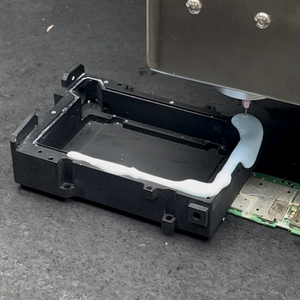
Troubleshoot overflow in four steps: post-valve-closing dripping—check needle gauge and back pressure; uncontrolled dispensing—check pressure step-back adjustment; end-of-path accumulation—check glue-off delay and Z-axis height; standby-machine seepage—check the seal ring and valve core wear. Rule out each item individually; do not change multiple parameters at the same time.
Read full article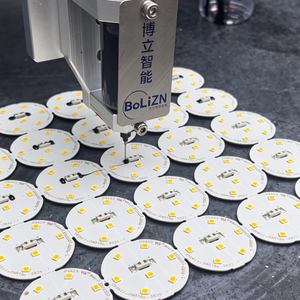
Dot pitch is derived backward from the dot diameter and overlap relationship: take the dot diameter as half the workpiece spacing, and the needle inner diameter as half the dot diameter; trial-dispense three points and fine-tune the dispensing time to converge. For sealing conditions, dot pitch should be tighter rather than looser; appearance parts value uniformity; for adhesive changes and seasonal changes use the gravimetric method...
Read full article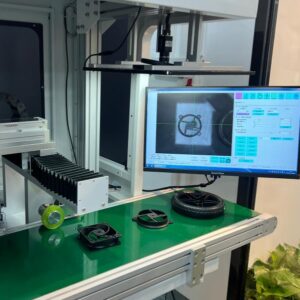
When the workpiece height difference is large, the image varies between sharp and blurry; mostly it is insufficient lens depth of field. The aperture is the primary lever; F8-F11 is the common balance point in industrial Vision; further adjust with working distance, focal length, and magnification, and use the highest point, focus plane, and lowest point three...
Read full article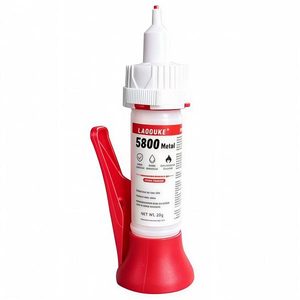
Quick-dry adhesive needle clogging is mostly caused by moisture curing: cyanoacrylate polymerizes upon contact with water, and residual adhesive in the needle thickens and clogs under high humidity and long pauses. Controlling moisture, choosing the right needle material, and doing proper air-source dehumidification and anti-suck-back can significantly reduce clogging.
Read full article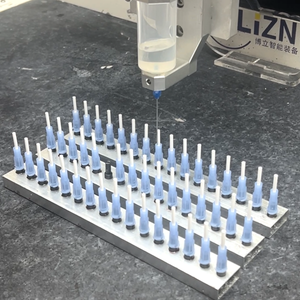
vision dispensing machine missed and skipped dots manifest as the points that should dispense left entirely empty, unlike a broken glue line where the glue line is interrupted; not the same. Most causes concentrate on Vision recognition failure being skipped by the program, array point misconfiguration, insufficient valve-open delay compensation, air pressure near the lower limit, adhesive...
Read full article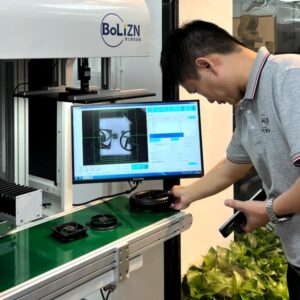
The standard vision dispensing machine process is: load and clamp the reference, Vision locate points, align needle and verify first-piece, execute dispensing, unload and sample. Clamp loading tight, align needle and verify first-piece, let parameters follow the adhesive — hold these three gates to secure yield.
Read full article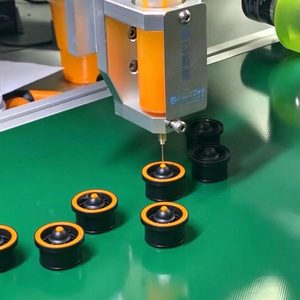
A vision dispensing machine is an automatic dispensing device with Vision positioning; it recognizes the workpiece through a camera, and after the control system compensates for deviations, a motion axis drives the dispensing head to operate — suited to less labor-intensive production for deviated incoming materials or complex workpieces.
Read full article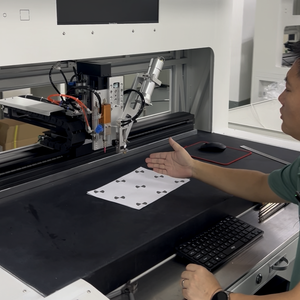
A vision dispensing machine is composed of the Vision system, motion system, dispensing system, control system and auxiliary structure, which are respectively responsible for seeing clearly, positioning, dispensing, scheduling and support, and work together to complete automatic dispensing.
Read full article