 Bolli Automation specializes in vision dispensing machines_factory direct


Bolli focuses on Vision Fluid
BOLI, FOCUS ON VISION‑BASED FLUID DISPENSING
Search All
BOLI, FOCUS ON VISION‑BASED FLUID DISPENSING
For quick-dry adhesive needle clogging, most of the time it is not poor needle quality, but moisture that ”ignites” the adhesive remaining in the needle.cyanoacrylateCuring is triggered by moisture in the air; when humidity rises and pauses lengthen, the residual adhesive on the needle's inner wall polymerizes on its own, until it clogs completely.
cyanoacrylate belongs tomoisture-curing adhesive, upon contacting moisture on the workpiece surface and in the air, it begins to polymerize, surface-drying in seconds to tens of seconds. Its speed is precisely the root cause of clogging. Industry experience isWhen relative humidity exceeds 65%, or the interval between two dispensing actions stretches beyond half a minute, the residual adhesive on the needle's inner wall easily thickens. Clogging increases noticeably in the rainy season, while a dry workshop is actually easier to handle — veteran operators all know this.
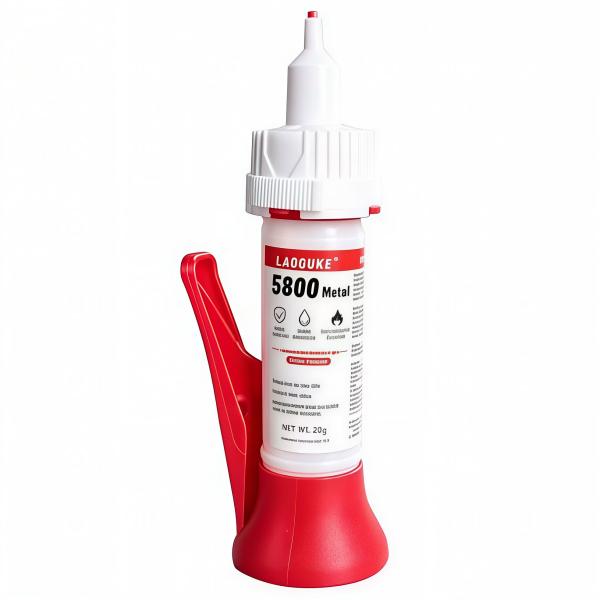
Feed tubes, connectors, syringes and needles that contact the adhesive should avoid unpassivated metal and nylon parts, as such materials catalyze premature curing of quick-dry adhesive。For low-viscosity quick-dry adhesive, a PTFE-lined needle is recommended, to prevent the adhesive from curing on the inner wall of the metal sleeve;For thicker gel-type adhesives, use a tapered angled needle, with low flow resistance, it won't easily stagnate at the root. During Bolli sample testing, needles are tried by adhesive brand, and humidity is recorded. How needles and the dispensing orifice are matched for flow rate,dispensing head and nozzleThat was covered in a previous article; re-confirm before selecting the valvemethod for judging adhesive compatibilityDouble-check once, and you basically won't fall into big pitfalls.
Water in compressed air is an invisible driver; add a filter between the air compressor and the adhesive valve to keep moisture and impurities out of the adhesive path; for stricter needs, use nitrogen. If suck-back is set too aggressively or the syringe is laid sideways, adhesive is drawn back to the needle root and accumulates and cures; a syringe cap with a filter can block this backflow. Clean the lines with anhydrous acetone — ordinary alcohol contains water and makes things worse the more you clean.
The dispensing volume gradually shrinks; after stopping for a few seconds it won't dispense — this isinner-wall curing, changing the needle only helps for a while — you must also check humidity; if dispensing suddenly stops or the glue line is intermittent, it is often cured particles at the bottle mouth or in the line blocking the needle hole — remove the needle and check against light whether it is clear; if the root clogs repeatedly, check the seal between needle and connector.Replace bent needles directly; don't bend them straight to make do — once the dispensing orifice deforms, the glue dot drifts.
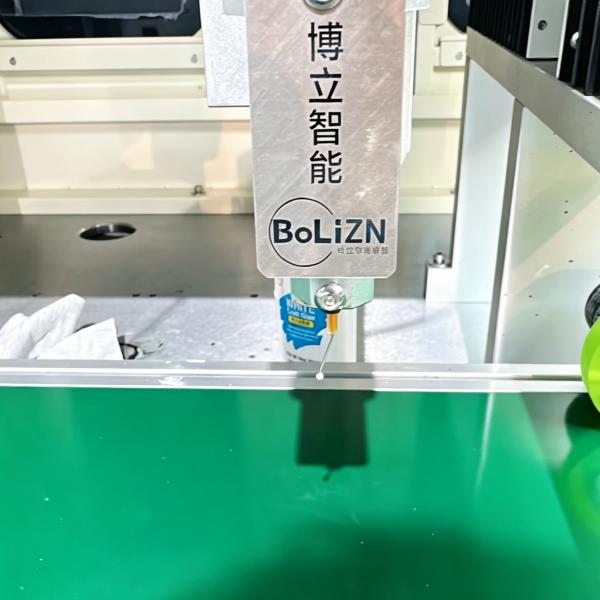
The quick-dry adhesive process is not that hard: control the moisture, choose the right needle, andsort out the habit of suck-back and cleaning, clogging naturally reduces. When a Vision automatic dispensing device switches to dispensing quick-dry adhesive, both the valve body and needle must change approach. Bolli's dispensing valve list includes matching quick-dry adhesive valves; match valves and needles by adhesive brand; for sample testing and after-sales, contact Shenzhen Bolli Automation Co., Ltd. 13352947677.
Source statement: EFD, Nordson. 'Many challenges in quick-dry adhesive dispensing? The following experience helps you', reprinted by Yifeidi Electronic Technology, in-fit.net; Baidu Baike entry on ”quick-dry adhesive”; Shenzhen Qilihang's 'How to solve dispensing valve clogging problems'. Conclusions on humidity, cleaning, and materials come from the above industry references; Bolli's content is limited to valve-body compatibility and after-sales.