 Bolli Automation specializes in vision dispensing machines_factory direct


Bolli focuses on Vision Fluid
BOLI, FOCUS ON VISION‑BASED FLUID DISPENSING
Search All
BOLI, FOCUS ON VISION‑BASED FLUID DISPENSING
around vision dispensing technology, systematically explain dispensing process principles, glue valve and adhesive-supply system selection, key technologies such as conformal coating and underfill, typical process parameters and machine-tuning points, combined with real cases from PCB, consumer electronics, semiconductor, new energy, and other industries, helping engineers quickly master core dispensing technology.
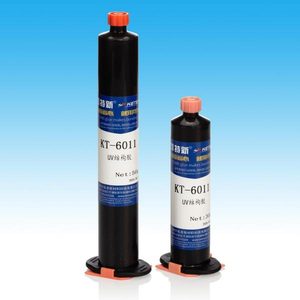
A UV LED curing lamp must be matched to the adhesive photoinitiator's absorption wavelength: short wavelengths cure the surface, long wavelengths penetrate deeper, intensity and time are considered together, and changing the adhesive type requires re-verification.
Read full article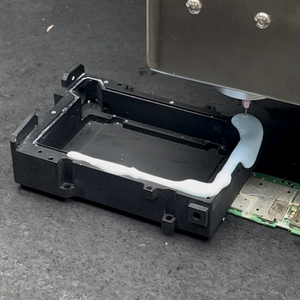
Troubleshoot overflow in four steps: post-valve-closing dripping—check needle gauge and back pressure; uncontrolled dispensing—check pressure step-back adjustment; end-of-path accumulation—check glue-off delay and Z-axis height; standby-machine seepage—check the seal ring and valve core wear. Rule out each item individually; do not change multiple parameters at the same time.
Read full article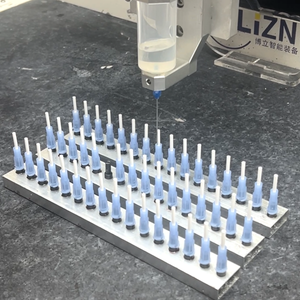
vision dispensing machine missed and skipped dots manifest as the points that should dispense left entirely empty, unlike a broken glue line where the glue line is interrupted; not the same. Most causes concentrate on Vision recognition failure being skipped by the program, array point misconfiguration, insufficient valve-open delay compensation, air pressure near the lower limit, adhesive...
Read full article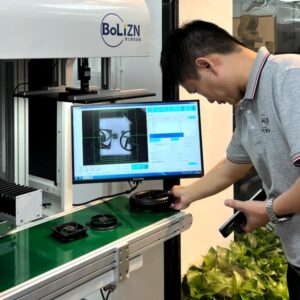
The standard vision dispensing machine process is: load and clamp the reference, Vision locate points, align needle and verify first-piece, execute dispensing, unload and sample. Clamp loading tight, align needle and verify first-piece, let parameters follow the adhesive — hold these three gates to secure yield.
Read full article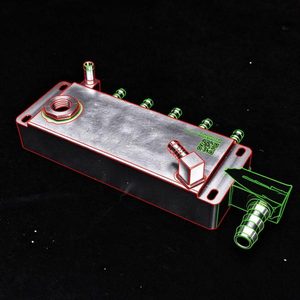
grayscaling compresses into brightness information, threshold segmentation separates foreground and background, contour extraction obtains computable boundaries. The three are sequentially dependent, forming the preprocessing production line before vision dispensing machine recognition.
Read full article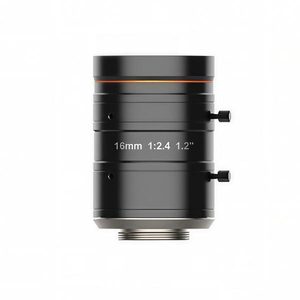
Exposure determines the brightness of the picture; focus and depth of field determine the clear range. The vision dispensing machine needs to balance brightness and clarity; Bolli relies on its self-developed system to uniformly manage the camera and light source.
Read full article
The bead shape, efficiency, and consistency of the vision dispensing machine are largely determined by process parameters, the core of which includes dispensing pressure, motion speed, temperature, dwell time, and needle lift height; one should first establish a baseline via sampling, then proceed to mass production and keep records.
Read full article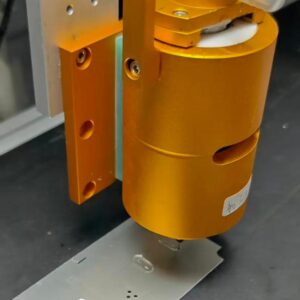
The core of matching the vision dispensing machine's adhesive and dispensing valve is: select the valve type by adhesive viscosity, filler ratio, and curing method, then match the feed pressure and needle bore, so as to dispense stably and avoid stringing, dripping, and bubbles.
Read full article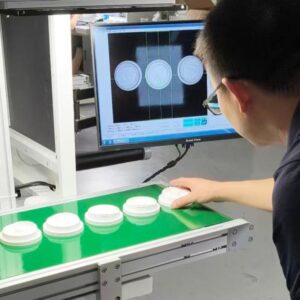
Delivery of the vision dispensing machine depends on the machine model and options; ramp-up is affected by calibration, glue, loading/unloading, and personnel. Cycle time can be estimated at 800/500 mm/s, and free sampling plus remote training shorten the lead time.
Read full article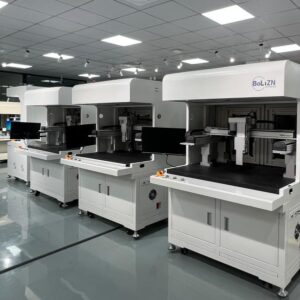
When reading the spec sheet, don't just focus on price. Verify across five items—stroke, speed transmission, camera vision, dispensing industrial-control machine, and quotation structure—and compare with Bolli's transparent parameters and configuration rules to quickly judge the match.
Read full article