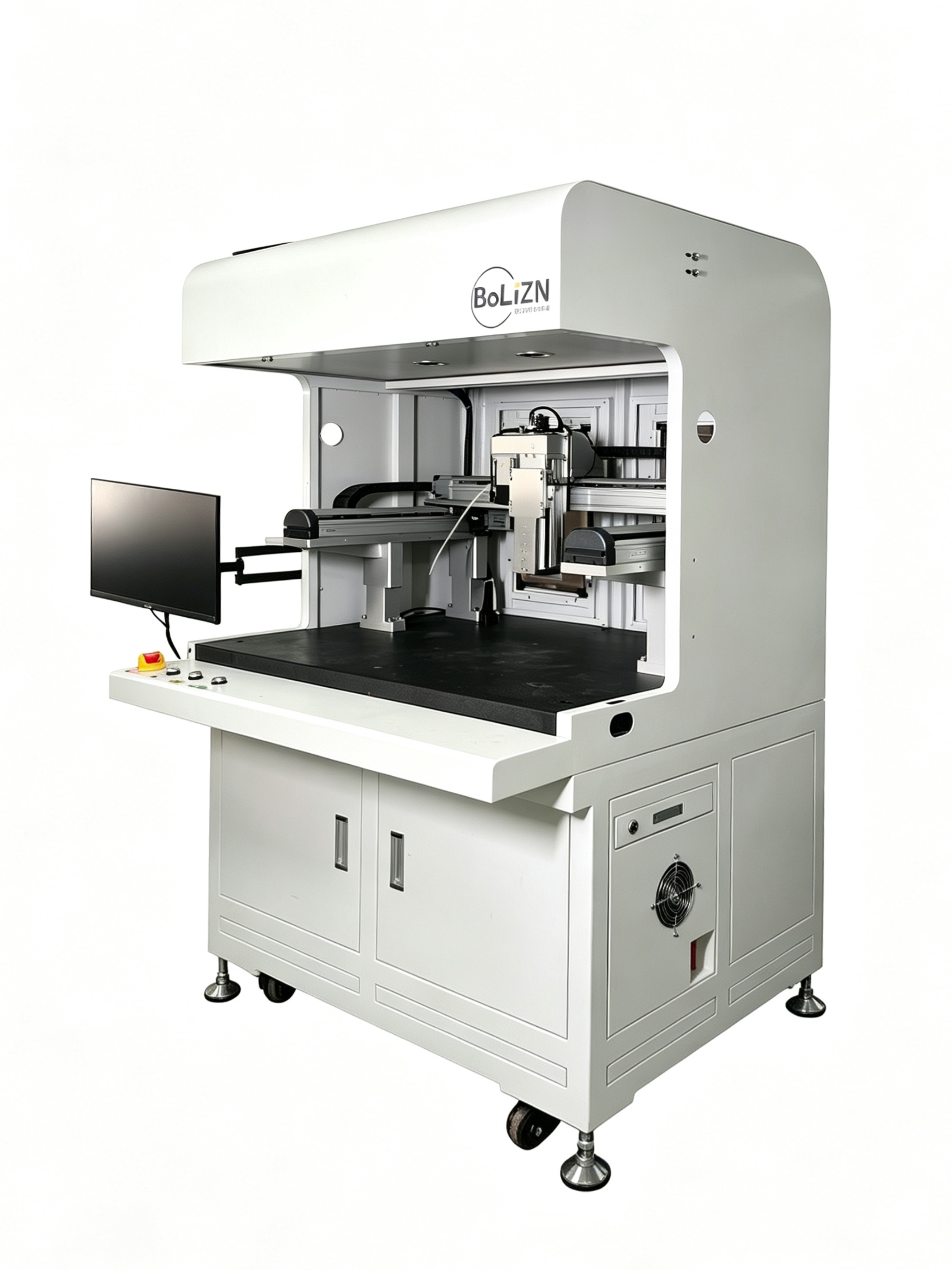
 Bolli Automation specializes in vision dispensing machines_factory direct


Bolli focuses on Vision Fluid
BOLI, FOCUS ON VISION‑BASED FLUID DISPENSING
Search All
BOLI, FOCUS ON VISION‑BASED FLUID DISPENSING
Dot pitch is not a number pulled out on its own. Whether and how much the two adjacent dots overlap determines whether the sealing line has gaps or the appearance surface has blobbing. The industry-wide reference is: take the dot diameter as about half the workpiece mating spacing, and set the dot pitch so adjacent dots keep partial overlap; then take the needle inner diameter as half the dot diameter.
To dispense a 0.4 mm dot, first fit a 0.2 mm inner-diameter needle, then converge by trial dispensing: dispense three points at the theoretical value; if the diameter is small, add 0.01 s of dispensing time each time; if overflow appears, reduce it; two or three rounds basically hit the mark. The needle height above the workpiece must also be constrained; the height-limit principle from industry references is not to exceed half the needle-tip inner diameter - raise it too high and the dot is drawn thin, actually failing to cover the set spacing, and intermittent missed dots appear. Bolli completes this convergence process during sample testing before handing the parameter table to the customer.
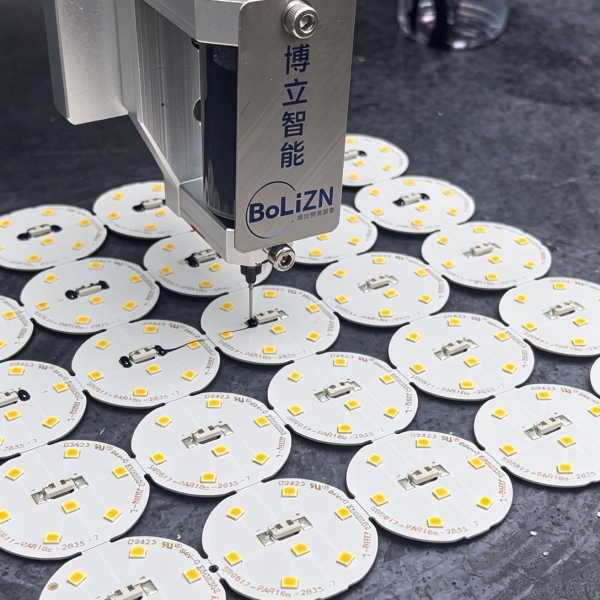
For sealing conditions like liquid-cooled boards and housings, dot pitch should be smaller rather than larger; one leaked seam means the whole batch is reworked for water leakage; for appearance parts like logo coloring and decorative dots it is the reverse - evenness between dots matters more than density, and stringing them together is directly scrapped. At the same dot pitch, a different-viscosity adhesive behaves not the same: thin adhesive spreads, thick adhesive pulls together. When workshop temperature drifts a few degrees, the dispensing amount also changes, so for adhesive changes, batch changes, and seasonal changes it is recommended to verify with the gravimetric method - dispense ten points consecutively and weigh the total; if the average single-dot weight doesn't match the last record, re-tune.
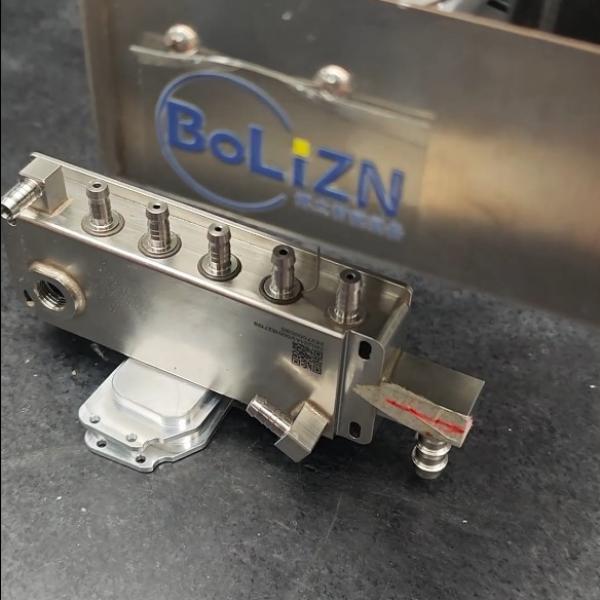
This liquid-cooled board base sealing line in the video is Bolli's workshop sample-testing record; long-line sealing uses continuous lines with no overlap problem and high efficiency; only short frames and point arrays use intermittent dotting. Changing dot pitch doesn't require redrawing the path - just change the dot-pitch parameter in the trajectory and re-save the version. Dot pitch, dispensing time, needle, and pressure are a set of linked parameters; changing one number alone is useless. How pressure and speed coordinate,This was covered before in 'how to set process parameters'.; the path layout for intermittent dotting,The trajectory editing article also covered this.。
Vision automatic dispensing equipment has a wide variety of dot-pitch conditions; if unsure, send the workpiece and adhesive for a sample test. For selection, sample testing, and after-sales, you can contactBolli Automation Co., Ltd.13352947677。
Source statement: the half-reduction principle of dot diameter and spacing, the needle inner diameter to dot ratio, and the trial-fine-tuning and height-limit principles - referencing the automatic dispensing debugging practical guide on Shanghai Tong'er Intelligent Technology's official website (tongerr.com), the fully automatic dispensing parameter adjustment guidance from Hongdahui Technology (penjiaoji88.com), and the SMT adhesive and dispensing process technical data from Dabangde Technology (dabond.com), retrieved November 2026.