 Bolli Automation specializes in vision dispensing machines_factory direct


Bolli focuses on Vision Fluid
BOLI, FOCUS ON VISION‑BASED FLUID DISPENSING
Search All
BOLI, FOCUS ON VISION‑BASED FLUID DISPENSING
Overflow is one of the most labor-intensive defects on the production line: glue wiping, cleaning, and re-inspection all follow; in severe cases it contaminates the assembly surface and directly causes scrap.. In most cases it's not the equipment failing; it'sParameters and consumables don't match. Following the four directions in sequence, you can usually pinpoint it.
Much overflow occurs after the adhesive valve closes. If the needle gauge is too small, adhesive flow is obstructed and creates back pressure; the valve core is already closed but residual pressure keeps pushing outward, so dripping lands at the path edge. Industry references suggest using a one-size-larger needle, or directly usingtapered angled needle, it has the smallest back pressure. Bubbles trapped in the adhesive show the same symptom; before usecentrifugal degassingA few minutes can save a lot of trouble.
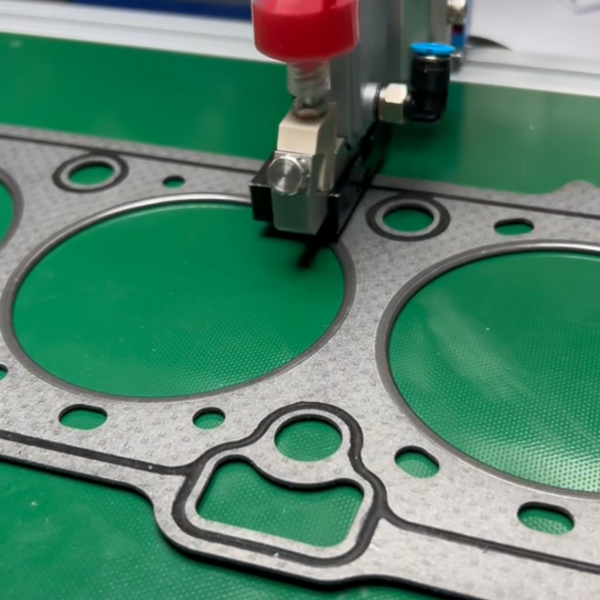
High pressure causes overflow and excess adhesive; low pressure causes intermittent skipping. The empirical range is to start thin adhesives from 0.1–0.3 MPa, and thick adhesives such as silicone and epoxy from 0.3–0.8 MPa, stepping in 0.05 MPa increments. When lowering pressure, do not do it all at once—reduce by 5%–10% each time, together withweighing methodCheck whether the single-dot weight changes with it. Bolli also tunes the machine by this margin; reducing too much at once makes the root cause harder to find.
The machine moves fast while the valve closes slowly, so a blob piles up at the path end. Set speed decay at corners; for end-of-path overflow, extend the glue-off delay by 0.1–0.3 seconds.Z-axis height also needs verification: too low, the needle drags adhesive out; too high, the glue dot stretches and fails to cover the pitch。
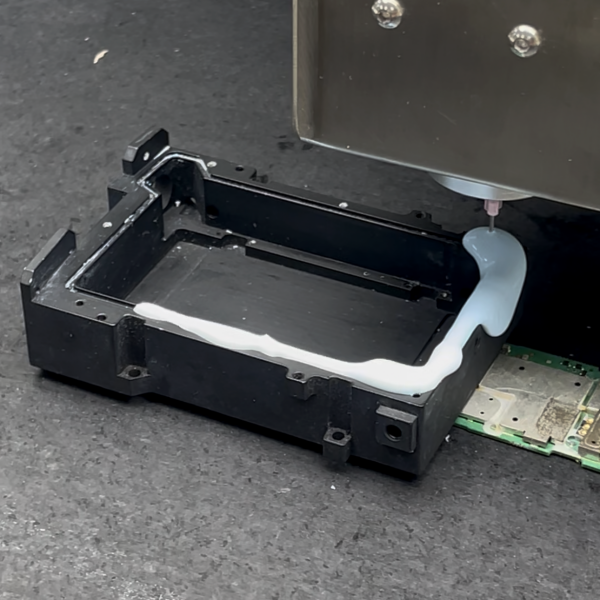
Seal ring aging and deformation, or the valve core and valve seat not fitting tightly, let adhesive slowly seep out during standby. Disassemble the valve to check residual adhesive and wear, replace seals of the same model—Bolli after-sales supplies them by model; if possible, perform a seal test on the valve body every five thousand pieces to catch hidden risks before batch production.
Overflow on a Vision automatic dispensing machine—the troubleshooting sequence is just four steps:Needle, pressure, glue-off delay, valve body, rule them out one by one; don't change multiple parameters at the same time. For valve body maintenance details,Dispensing valve body maintenance and calibration那篇写过; how to control the dispensing volume itself,The dispensing volume control was also covered in that article.. For sample testing and after-sales, contact Bolli Automation Co., Ltd. at 13352947677.
Source statement: the relationship between needle back pressure and valve-closing dripping, the pressure adjustment range and stepping, and glue-off delay handling, referencing GediSi Automation's automatic dispensing valve problem-handling methods (glueauto.com), Donghong Machinery's four-direction positioning for unstable dispensing volume (wzdonghong.com), and Shenzhen Tianfengtai Technology's dispensing leakage cause solutions (WeChat official account), retrieved November 2026.