 Bolli Automation specializes in vision dispensing machines_factory direct


Bolli focuses on Vision Fluid
BOLI, FOCUS ON VISION‑BASED FLUID DISPENSING
Search All
BOLI, FOCUS ON VISION‑BASED FLUID DISPENSING
Bolli Automation dispensing technology column, continuously updating vision dispensing machine selection, parameter debugging, glue valve matching, takt calculation, defect troubleshooting, etc. practical dry goods, helping electronics manufacturing engineers avoid detours, sharing source-factory frontline experience.
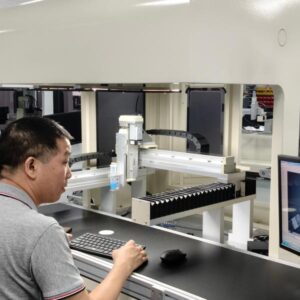
Recognition stability of the vision dispensing machine relies on clear imaging, consistent lighting, and a fixed reference; perform four routine checks. The lens needs standardized cleaning; after changing the lens, focal length, or light source, be sure to recalibrate and verify the recognition effect.
Read full article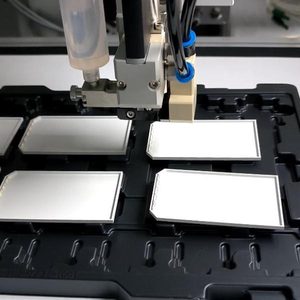
Dispensing quality is not single-time stable; glue volume and width slowly drift with conditions; inspecting only first and last pieces easily misses intermediate defects. Select key characteristics, standardize measurement, use control charts to warn of anomalies, and assess process capability with Cpk; follow stabilize process first, then measure...
Read full article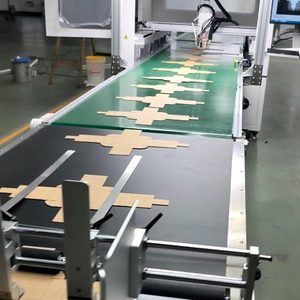
Automatic dispensing machines are upgrading from pure execution tools that follow program coordinates to intelligent equipment with Vision perception and AI decision-making. Vision positioning "looks" before "dispensing," AI makes changeover fixture-free, online inspection closes the loop on glue volume control, and data systems do predictive maintenance; it is...
Read full articledispensing production-line supporting is based on the air source; the air compressor must be stable at 600-1200hpa and dry-filtered; curing is selected by adhesive, loading/unloading is determined by batch; Bolli's options and remote support can help complete the setup.
Read full article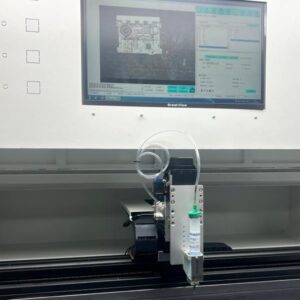
Three common dispensing trajectory methods: teaching, graphic import, template reuse. Teaching suits few points and sampling; graphic import suits complex contours with drawings; template reuse suits multi-variant small batches.
Read full article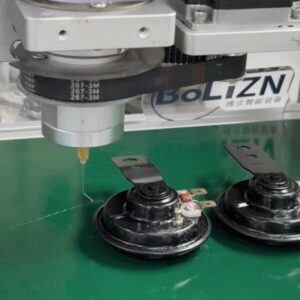
static electricity is often overlooked in the dispensing workshop, but it absorbs dust affecting adhesion and appearance, makes fine-glue dispensing skew and drift, damages sensitive components, and causes thin-film parts to stick and be hard to pick and place. Plastic film types, electronic PCB types, fine glue lines or high-speed dispensing, and dry environments...
Read full article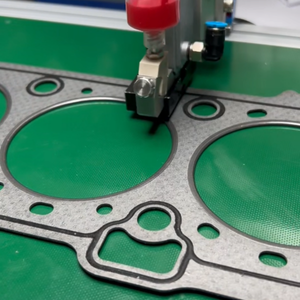
dispensing order is a frequently overlooked process parameter. The order of dots affects three results; start and end points themselves easily accumulate glue or leave tails. Five common principles of dispensing order attached.
Read full article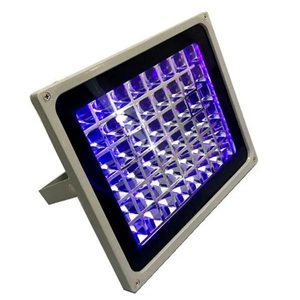
curing must be designed in sync with the dispensing solution: UV curing relies on light irradiation, thermal curing relies on temperature and time; which to choose depends on the adhesive mechanism; capacity is often stuck at the mismatch of "fast dispensing, slow curing", which can be connected online or offline; do not touch before curing...
Read full article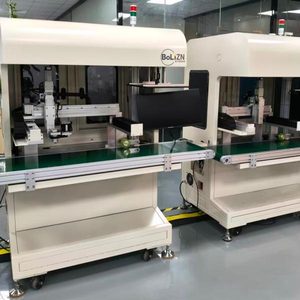
when reading the parameter table, value the caliber rather than the number: stroke is calculated by workpiece plus fixture and mind the Z-axis; the nominal speed is the mechanical upper limit and the usable value needs actual measurement; accuracy must see the caliber clearly; stroke must also distinguish the specified stroke from the actual dispensing range; finally rely on sample testing verification.
Read full article
dispensing defects must first be classified by type such as insufficient/excessive adhesive, misalignment, stringing, bubbles, glue break, poor curing, etc., recording traceability information; then sort by quantity to catch the main contradiction, use correlation comparison to find the real cause, and finally return to parameters and incoming materials to break them one by one.
Read full article