 Bolli Automation specializes in vision dispensing machines_factory direct


Bolli focuses on Vision Fluid
BOLI, FOCUS ON VISION‑BASED FLUID DISPENSING
Search All
BOLI, FOCUS ON VISION‑BASED FLUID DISPENSING
The vision dispensing machine must ”see clearly” before it can ”dispense accurately”, and the premise of seeing is good lighting. Same workpiece, wrong light source or angle, edges blur and features drop, no algorithm can save it later. Many positioning errors are not camera problems but bad lighting. This article starts fromFrom light-source type and use case to reflection and dark-part handling, explaining how a vision dispensing machine settles its lighting scheme.
The camera and lens decide how fine you can shoot, but lighting is decided by the light source. Bolli Automation vision dispensing machine adoptsHikvision industrial camera with self-developed light source solution, the purpose is to stably present the workpiece contour and features. If lighting is not done well, even the best camera yields only low-contrast images, and Vision positioning will naturally drift. Therefore, the debugging sequence should set the lighting first, then discuss algorithms and thresholds.
ring light is suitable forgeneral parts requiring front uniform illumination;coaxiallightsuppress specular reflection, suitable formetal, wafer, etc. flat reflective surfaces; backlight outlines the contour, suitable fortransparent, thin sheets, and workpieces requiring outer-shape extraction; the bar light can be pulled outlong-edge contrast, suitable forfor long strips or large-format parts. choose the light source by first looking at the workpiece material and the features to extract, then decide the light shape and color, rather than looking at camera parameters first.
Metal, coatings, black plasticis the difficulty of lighting: specular reflection usescoaxial or polarization suppresses highlight,dark light-absorbing partsdedicated lens tissuehighlight fill light and contrast color make edges stand out. Bolli Automation provides unlimited remote after-sales and sample testing, can measure the light source combination on customer workpieces, and output reproducible lighting parameters. Once the lighting scheme is finalized, it can be called by workpiece during changeover, without re-adjusting each time, ensuring stability and saving debugging time.
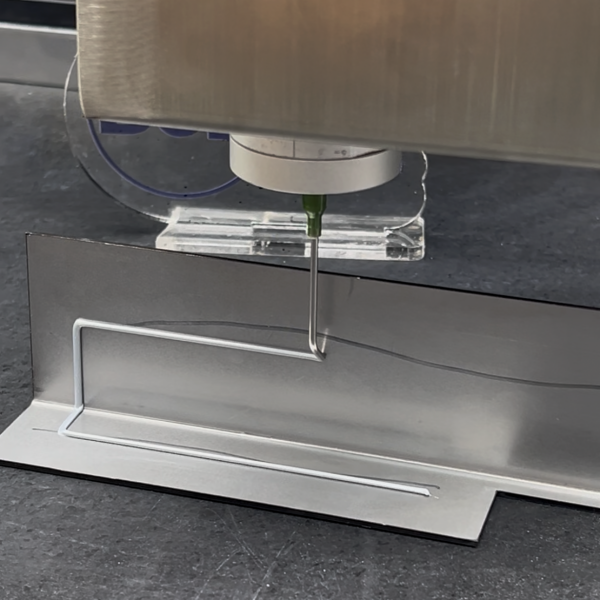
the set lighting cannot only exist in the debugger's head. Sample pieces should be photographed and compared with different light source combinations, and the parameter set that stably extracts features should be recorded as the workpiece process card, includinglight source type, angle, color, and camera exposure. do a re-shoot verification before mass production, confirm yield and consistency meets the standard before finalizing. Subsequentwhen changeover, light source aging, or lens contamination cause imaging changes, records enable quick return to baseline, so you don't have to start from scratch every time. For difficult-to-light workpieces such as reflective and dark ones, the switching order of multiple light source combinations must be written clearly, so that day and night shifts can reproduce the same imaging effect.
The imaging quality of the vision dispensing machine is first decided by lighting; choosing the right light-source type, scene and color stabilizes feature extraction. If you need to combine your specific workpiece with actual light-source combo and curing-light parameters, contactBolli Automation Co., Ltd. 13352947677, with engineering personnel assisting in completing sample testing and solution confirmation.