 Bolli Automation specializes in vision dispensing machines_factory direct


Bolli focuses on Vision Fluid
BOLI, FOCUS ON VISION‑BASED FLUID DISPENSING
Search All
BOLI, FOCUS ON VISION‑BASED FLUID DISPENSING
During mass production, dispensing defects are almost impossible to completely avoid; common manifestations include misalignment, breakage, overflow, stringing, and uneven glue shape. Behind these issues is usually not a single cause but a superposition of positioning, valve body, parameters, or adhesive state. Establishing a systematic analysis mindset enables quick root-cause location on the line and reduces downtime loss, rather than trial-and-error based on experience.
misalignmentrefers to the glue dot deviating from the target position as a whole or locally;broken glueIt is the continuous dispensing that shows interruption or missing segments;overflowis the glue body exceeding the design range and piling outward;stringingis fine filaments dragged out when lifting the needle;uneven glue shapeis that for the same batch of products the glue-dot size or shape is inconsistent. Different manifestations point to different links; accurately describing the phenomenon is the first step of analysis and the basis for communication with the equipment side.
Offset is mostly related toVision positioning or calibration offsetRelated. If the entire batch shifts in the same direction, prioritize checkingwhether calibration and needle alignment have failed; if individual workpieces are offset, it may be incoming material placement error or unstable Vision recognition features. Bolli's vision dispensing machine positions through Hikvision camera and self-developed Vision algorithm, but the workpiece incoming posture and fixture consistency still affect the result; the loading and positioning must be included in the troubleshooting together, rather than just staring at the equipment itself.
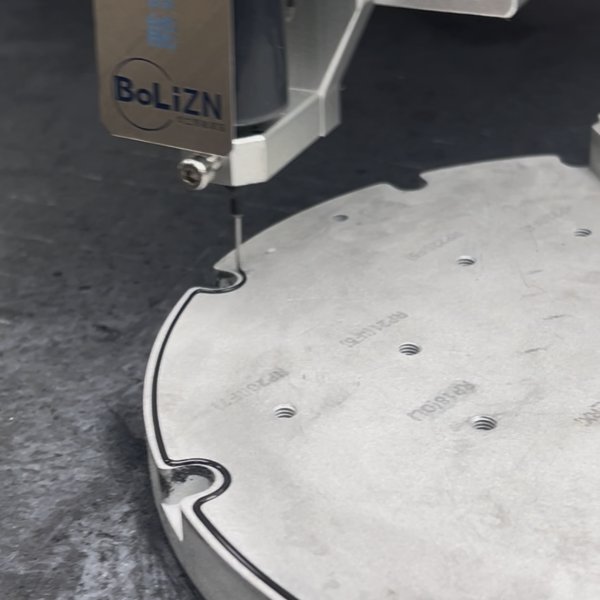
Broken glue often points toValve-body movement is not smooth, dispensing pressure is insufficient, or the adhesive contains air; overflow is mostlyPressure too high, needle-lift height insufficient, or valve-port residue. The countermeasure is not simply to increase or decrease the pressure, but to first confirm the valve body status and whether the adhesive path is clear, then fine-tune the parameters around the target glue volume. Bolli's vision dispensing machine, with a stable motion platform, can expose the broken-glue and overflow-glue windows in advance during sample testing and correct them, so mass production takes fewer detours.
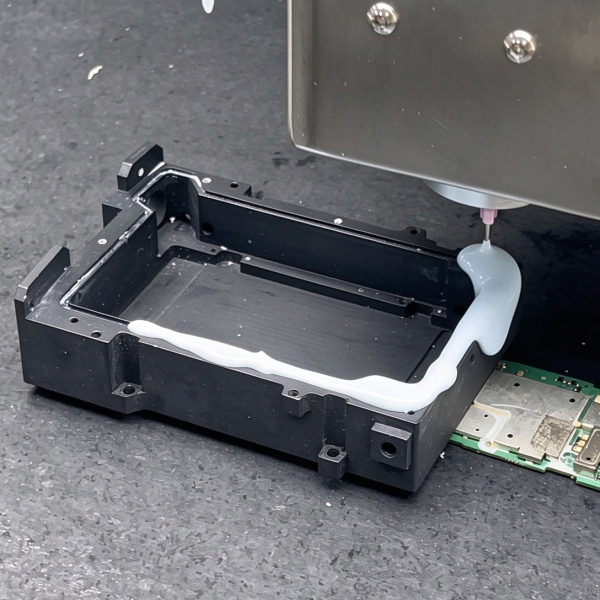
Stringing is mainly affected byNeedle-lift height, dispensing pressure, and adhesive fluidity affect, appropriately increasing needle-lift speed, optimizing break-off action, or adjusting temperature often improves it; uneven glue shape relates toRelated to pressure fluctuation, valve-body wear, or inconsistent adhesive temperature. Such issues are sensitive to consistency; parameters should be recorded and trends observed rather than masking with a single adjustment, otherwise they will reappear when switching batches.
It is recommended to follow“Positioning-valve body-parameters-adhesive”the sequence of layered verification: first confirm calibration and Vision positioning, then check the valve body and glue path, then review pressure, speed, temperature etc. parameters, and finally check the adhesive batch and warm-up status. Layered troubleshooting avoids back-and-forth trial and error. Bolli provides unlimited remote after-sales and sample-testing support, and can assist enterprises in consolidating the troubleshooting paths of common defects into standard actions, shortening exception-handling time.
Besides the equipment's own Stability, yield improvement relies more onfront-end verification and process management. Bolli's vision dispensing machine can expose most defect risks through sample testing during trial production, and confirm the valve body and parameter combination based on the sample; after mass production, it is recommended to establish the habit of parameter records and changeover review, so that problems are found early. Turning improvement into reusable experience is more sustainable than one-time fire-fighting, and easier to reflect management capability in customer audits.
in summary, dispensing defects are the result of multiple links — positioning, valve body, parameters, and adhesive — superimposed; a systematic troubleshooting order of "positioning — valve body — parameters — adhesive" should be established rather than trial-and-error one by one. Bolli's vision dispensing machine can expose most hidden dangers in trial-production sample testing, and assist enterprises in solidifying the troubleshooting path into standard actions, combined with parameter records and changeover review to stabilize yield. If you need to evaluate a dispensing defect improvement plan combined with specific workpieces, you cancontact Bolli Automation 13352947677 to get sample-testing and after-sales advice.