 Bolli Automation specializes in vision dispensing machines_factory direct


Bolli focuses on Vision Fluid
BOLI, FOCUS ON VISION‑BASED FLUID DISPENSING
Search All
BOLI, FOCUS ON VISION‑BASED FLUID DISPENSING
After the vision dispensing machine runs, it generates a large amount of process data: dispensing counts, alarms, tact, yield, valve body status, etc. If these data only lie in the equipment, they are just records; aggregated into a dashboard, they become management handles. This article starts fromwhat to collect, how to transmit, how to use the dashboard, explaining a usable data acquisition and monitoring solution。
not all data is useful; first pick by management goal. The production side usually cares about output, cycle time, and equipment status; the process side cares about dispensing amount, pressure, and temperature curves; the quality side cares about yield, defect classification, and alarm frequency. Bolli's equipment runs on an industrial control machine; process parameters are already recorded in the system. The key is to export these scattered fields under a unified caliber, rather than each looking at its own screen.
vision dispensing machine can be realized throughsend data to the host system via a communication interface. the common practice is for the equipment side to report periodically according to an agreed protocol, or for the upper system to pull periodically, then enter the database or factory platform. This and MES integration are the same set of communication capabilities, differing only in the collected fields and frequency. When networking, it is recommended to fix the IP, isolate the production line network, and add Timestamp and equipment number to the data for subsequent traceability.
a dashboard is not about moving tables onto a big screen, but aboutkey indicators into trends and alerts. real-time output, equipment operation rate, shift yield, top alarm items, marked red with color and threshold, anyone passing by can see anomalies. Dashboards are layered by role: the workshop sees real-time status, management sees trends and comparisons, avoiding information overload. A good dashboard lets people click the mouse less and see problems more.
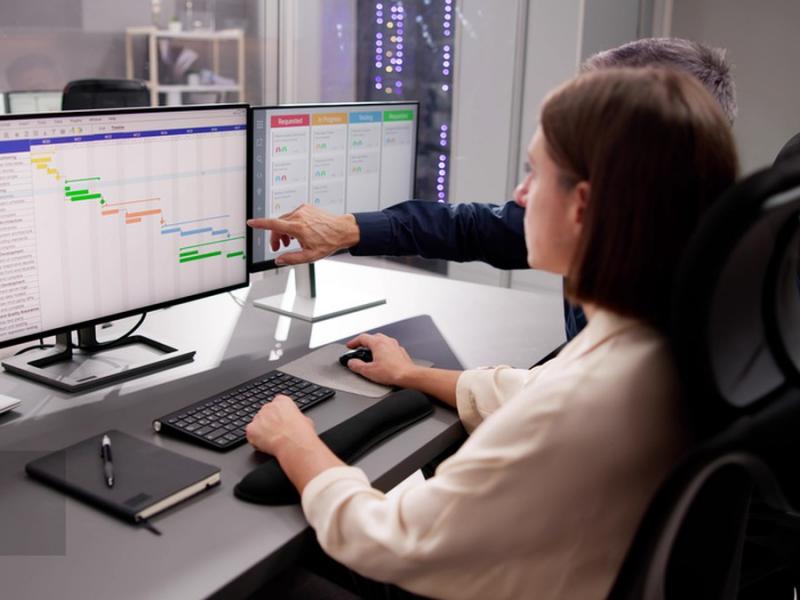
The value of collection lies in the closed loop. Correlating alarm frequency with specific valve bodies and adhesive batches can detect wear-part decline in advance; comparing tact with changeover time can locate etc. wasted time; overlaying defect classification with parameter curves can reverse-engineer the process window. If vision dispensing machine process data can continuously accumulate, predictive maintenance and yield improvement have a basis, rather than relying on experience.
First,inconsistent field definitions, making cross-equipment comparison impossible;
second iscollecting without governance,garbage in, garbage out;
third iscramming too many boards on the dashboard, instead no one looks at it.
It is recommended to first run through one production line on a small scale, confirm that fields and alarms are meaningful, then replicate horizontally. vision dispensing machine data collection should start from ”few but accurate” and gradually expand to all metrics.
Putting data online also bringsboundary issues. Production line data involves process and capacity, so it shouldand segregate the office network,with view and export permissions opened by role, to prevent leakage of key parameters. It is recommended that equipment-side reporting use a read-only channel to prevent accidental writes from the platform disrupting operation. For data requiring long-term retention, define the archiving cycle and backup responsibility, satisfying traceability while avoiding unlimited growth that slows queries. Writing security and permissions into the collection plan is easier than fixing problems afterward.

vision dispensing machine process data only becomes a management asset when aggregated into a dashboard,acquisition, transmission, dashboard, and closed-loop, four steps linked together, to turn alarms, cycle time, and yield into actionable improvement points. If you need to confirm collectable fields and integration method combined with machine model, you can contactBolli Automation Co., Ltd. 13352947677, with engineering personnel assisting in building a suitable monitoring solution.