 Bolli Automation specializes in vision dispensing machines_factory direct


Bolli focuses on Vision Fluid
BOLI, FOCUS ON VISION‑BASED FLUID DISPENSING
Search All
BOLI, FOCUS ON VISION‑BASED FLUID DISPENSING
The dispensing head and nozzle are the last checkpoint before adhesive leaves the equipment; dot diameter, shape quality, and whether stringing occurs are almost entirely determined by them. For much unstable dispensing and inconsistent glue dots, the problem is neither the valve body nor the program, but the nozzle section. This article, from nozzle type and aperture selection to clogging maintenance, explains how to choose and maintain the dispensing head of a vision dispensing machine, guarding the quality of the "last millimeter".
the adhesive is metered by the valve body and sent to the dispensing head, and finally extruded through the nozzle in a set shape. Vision dispensing machines commonly use needle valve, suck-back valve, screw valve, etc. valve bodies, but whichever type,The nozzle's aperture, inner-wall light finish, and end-face shape directly determine the glue-dot diameter and stringing performance. Although it is small, it is the last millimeter of dispensing quality; no matter how accurately the front is adjusted, a wrong nozzle will waste all previous efforts.
By shape, there areRound hole, Angled nozzle, multi-head, and special cross-sectionnozzles;
by material, there areStainless steel, Tungsten steel, and ceramics, each with emphasis on wear resistance and anti-sticking.
For selection, first look atadhesive viscosity and dot-diameter requirements: High-viscosity adhesive uses large holes or short cones to prevent clogging; micro-dots use fine holes but guard against stringing; abrasive adhesives choose wear-resistant material. Matching aperture with valve-body dispensing volume ensures consistent dots, rather than only looking at valve-body parameters.
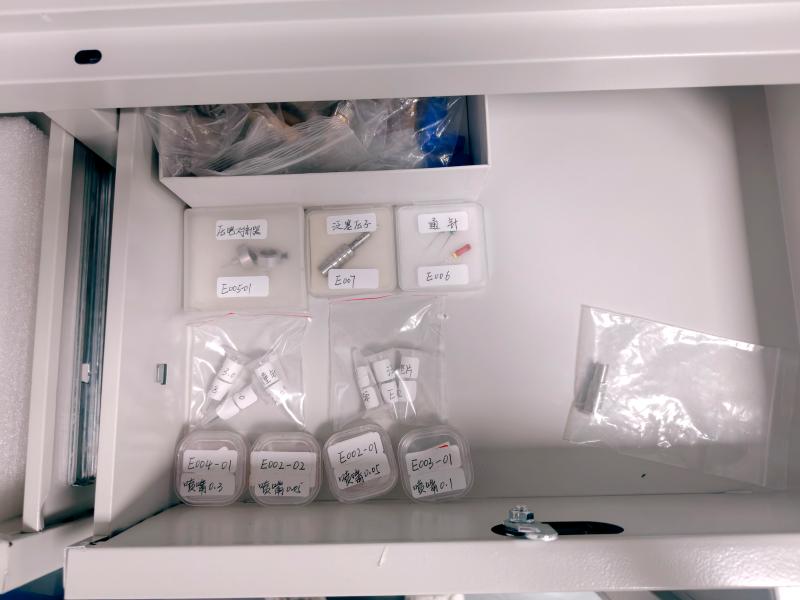
Too small a bore is easily clogged by high-viscosity or filler-containing adhesives; too large loses dot-diameter control and makes micro-dots difficult. Generally, firstDerive the aperture from the target dot diameter, then verify the actual dispensing on the sample. Bolli provides unlimited remote after-sales and sample testing, and can confirm nozzle specifications and dispensing parameters on-site with specific adhesives, avoiding repeated trial-and-error from experience-based selection that drags delivery pace.
Nozzles most fearcloggingandwear: Daily check whether inner wall has adhesive hanging and end face has residual adhesive; clean with compatible solvent before adhesive change or machine stop, shorten cleaning cycle for abrasive adhesives; for stringing or offset, first disassemble and inspect the nozzle rather than drastically adjusting parameters. Include nozzle specifications and cleaning records in the workpiece process card, assemble by card during changeover, which significantly reduces defect rate and shortens changeover time. Replace promptly when end face is burred or aperture enlarges; don't force it until it affects the whole batch.
Multi-product switching is most prone toinstalling the wrong nozzle and incomplete cleaningproblems. Standard changeover should first remove the old nozzle for cleaning or scrapping, verify the specification on the process card before assembly, and after assembly do sampling to confirm dot diameter and position.When switching between different adhesives, confirm solvent compatibility to avoid residue reaction, skinning, and clogging. Record the nozzle'sspecifications, lifespan, and disassembly/assembly records together with the workpiece, which can both reduce misassembly and facilitate tracing the source of quality fluctuations. For abrasive adhesives, the nozzle should be listed as a consumable and forcibly replaced by output, rather than only handling it when dot diameter is visibly abnormal, thus avoiding batch dispensing defects from occurring silently.
the dispensing quality of a vision dispensing machine is largely determined by the dispensing head and nozzle; selection depends onViscosity and dot diameter; maintenance depends on cleaning and records. If you need to confirm nozzle specifications and dispensing parameters with your specific adhesive, contact Bolli Automation Co., Ltd. at 13352947677, and engineering personnel will assist with sample testing and selection.