 Bolli Automation specializes in vision dispensing machines_factory direct


Vision dispensing machine dispensing volume how to ensure consistency?
What dispensing fears most is ”luck”-same batch, some glue overflows, some too little to bond. Dispensing-volume consistency directly determines yield and rework rate; it is not a fixed parameter but the result of the whole systemValve, pressure, speed, Vision, environmentcoordinated result. The idea of ensuring consistency has two layers: first calibrate the ”valve-open time to actual glue volume” relation accurately, then monitor in production and auto-correct.
I. Why calibrate: establish the relationship between valve-open time and glue volume
Pressure-time dispensing: glue volume essentially decided by valve-open time and pressure, but viscosity, temperature and line state make it drift. Practice: use a weighing module or scale, measure the sample board multiple times, build the ”valve-open time to actual glue volume” calibration curve. After calibration, production samples by takt; if volume drifts up or down, auto-fine-tune valve-open time or pressure. This step is the root of all later consistency control; if calibration is off, later tuning is castle in the air.
II. Gravimetric method: the gold standard for offline calibration
. Continuously dispense several times under the same parameters, weigh each drop with a high-precision electronic balance, and calculate the average and standard deviation. The industry uses the coefficient of variation (CV) to measure consistency; precision micro-packaging scenarios have strict CV requirements and must stably control the error very small. The gravimetric method is not affected by adhesive viscosity and temperature, with high precision; the disadvantage is poor real-time performance, suitable for periodic calibration and first-piece confirmation, not for monitoring every glue line.. Under same parameters dispense several times, weigh each drop with a high-precision electronic scale, compute mean and standard deviation. Industry uses coefficient of variation CV to measure consistency; precision micro-packaging demands strict CV. Gravimetric method is unaffected by viscosity and temperature, high accuracy, but poor real-time, suiting periodic calibration and first-piece confirmation, not per-line monitoring.
III. Vision inspection: online real-time monitoring of glue width and breaks
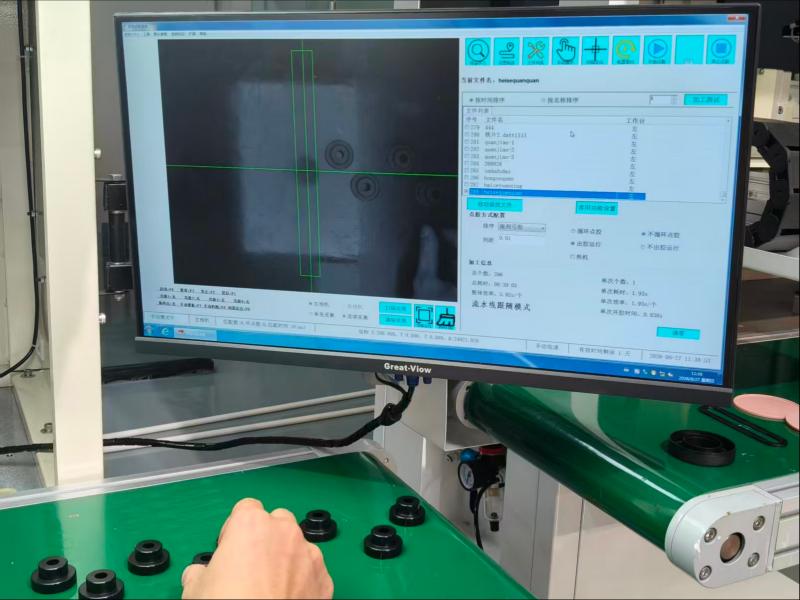
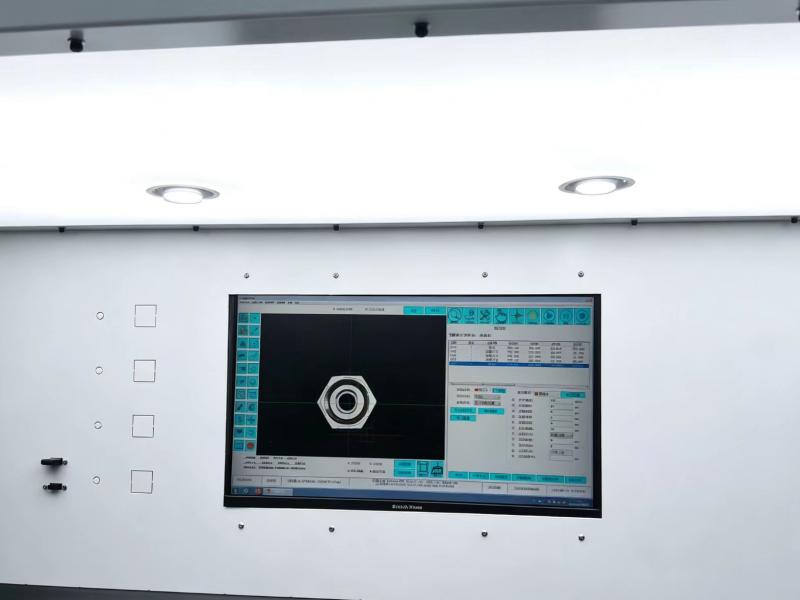
To monitor every glue line in real time needs Vision. Industrial camera shoots the glue-line image, the algorithm extracts width, height and continuity, indirectly judging enough volume. 2D Vision sees line width, 3D Vision reconstructs 3D form by structured light, computes volume, directly corresponding to volume. Vision also catches break, overflow, offset, writes results back to the controller to auto-correct trajectory and dispensing speed. Bolli with Hikvision camera and self-developed light source, this online inspection recovers platform cumulative-error glue-volume fluctuation in real time, keeping appearance consistent.
Consistency is not one magic parameter, but a system engineering. In hardware, select valves adapted to precision dispensing; in control, do online weighing feedback plus pressure-flow closed loop; in environment, give the glue barrel and pipeline constant temperature to reduce viscosity fluctuation; plus vision positioning re-inspection to fix the coordinate deviation caused by workpiece placement. The equipment can also automatically calibrate on a set cycle, reducing manual debugging errors. Bolli provides unlimited remote after-sales; how to build the calibration curve and how to adjust the closed-loop parameters, engineers can guide online; for complex products, first use free sample testing to run consistency through before mass production.
Consistency is not one magic parameter but systems engineering. On hardware choose a valve body suited to precision dispensing; on control do online weighing feedback plus pressure-flow closed-loop; on environment keep glue barrel and lines at constant temperature to reduce viscosity fluctuation; plus Vision positioning re-inspection to fix coordinate deviation from placement. The equipment can also auto-calibrate by set cycle, reducing manual tuning error. Bolli provides unlimited remote after-sales; engineers can guide online how to build the calibration curve and tune closed-loop parameters; for complex products free sample first to run consistency before mass production.
The practical order is to first complete sample testing and parameter solidification for key products, introduce simple online weighing and first-piece inspection, and after this system runs smoothly, then talk about vision closed loop and system integration. Many old production lines rely on experienced masters by feel; complementing the basic work in one or two months can clearly see consistency improvement and rework rate decline. No matter which step, save the inspection data and adjustment records for monthly review, so that occasional problems can be solidified into process improvements.
The practical order: finish key products' sample and parameter curing first, introduce simple online weighing and first-piece inspection; once this system runs smoothly, talk Vision closed-loop and system integration. Many old lines rely on the master's manual feel; making up basic work in one or two months visibly improves consistency and cuts rework. Either step, store inspection data and adjustment records for monthly review, to solidify occasional problems into process improvement.