 Bolli Automation specializes in vision dispensing machines_factory direct


Bolli focuses on Vision Fluid
BOLI, FOCUS ON VISION‑BASED FLUID DISPENSING
Search All
BOLI, FOCUS ON VISION‑BASED FLUID DISPENSING
during long-term use of a vision dispensing machine, glue change, glue cleaning, and periodic pipeline flushing all produce waste adhesive and cleaning waste liquid. In the past, such waste was often ignored, but as environmental regulations tighten and customer on-site audits become detailed, how to standardize collection and disposal has become part of daily dispensing workshop management.Understanding the source and nature of waste liquid is the first step to compliance. Especially in workshops with multiple adhesive types and lines and frequent model changes, if waste liquid management is absent, it is easy to expose shortcomings during customer audits or environmental inspections.
There are three main sources:
First isresidual old adhesive in the lines and valve body when changing adhesive;
second isadhesive residue and wipes generated from periodic glue cleaning and valve disassembly maintenance;
the third ismixed waste liquid formed when flushing the adhesive supply lines and needles with cleaning agent。
Among these, cleaning waste liquid often containssolvent components, and its nature is more complex than pure waste glue, requiring separate treatment and must not be disposed of as ordinary garbage.
epoxy and polyurethane types are mostly two-component reactive, with some irritation and chemical activity before curing; silicone types are relatively stable but strongly adhesive and hard to degrade naturally; UV adhesive and its cleaning fluid contain light-sensitive and mechanical solvent components; water-based adhesive waste liquid is relatively friendly. Clarifying this avoids mixing reactive waste adhesive and solvent waste liquid to create extra risk. Bolli's vision dispensing machine balances cleanability in valve body and adhesive path design, reducing residue and waste-liquid amount to a certain extent, but the waste liquid itself still needs classified management by nature.
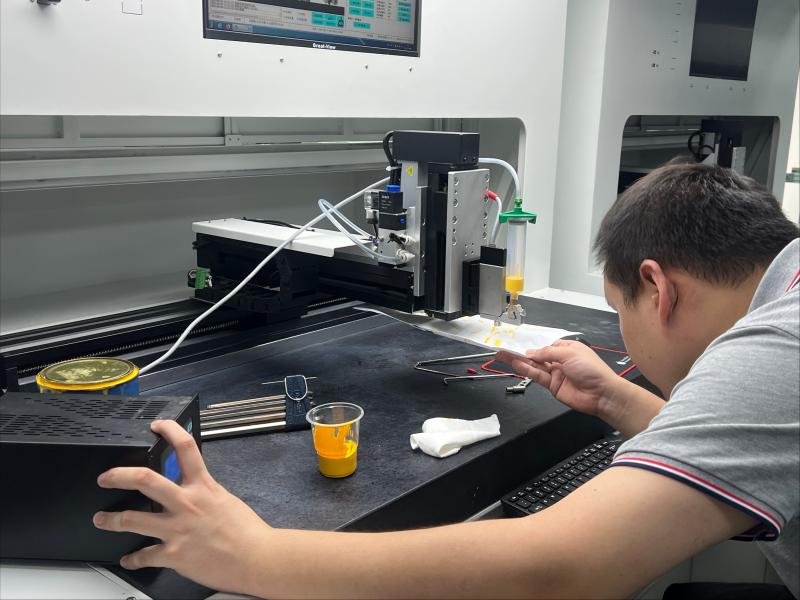
The basic principle issealed, labeled, separated. Waste glue should be put into covered containers; cleaning waste liquid usessolvent-resistant dedicated barrels, the two must not be mixed; label the container exterior with adhesive type, date, and hazard characteristics, stored in a ventilated, light-avoiding area away from fire and drinking water. Cloths and gloves that wiped adhesive are managed as contaminated waste, avoiding random discarding causing secondary pollution.
waste adhesive and waste liquid containing mechanical solvents or reactive components usually belong to hazardous waste and must be collected and disposed of by qualified units, strictly prohibited from being poured into sewers, rainwater outlets, or mixed into household waste. Enterprises should establish temporary storage ledgers, recording type, quantity, destination, and transfer manifests for audit traceability. Bolli provides unlimited remote after-sales and on-site debugging, and can assist in reducing waste-liquid generation links in the maintenance process design.
At the equipment selection stage, prioritizevalve bodies that are easy to disassemble and clean, and adhesive paths with self-closing and suck-back structures, and supports programs for small-dose glue change, reducing residue from the source. Combined with Bolli's sample testing verification, it can also optimize cleaning frequency and solvent usage on the premise of confirming the glue shape meets requirements, balancing yield and environmental protection, and shifting waste-liquid management from passive disposal to active reduction. In the long run, producing less is more economical than post-disposal, and should also be included as one of the hidden indicators in equipment selection evaluation.
the waste adhesive and cleaning waste liquid of a vision dispensing machine should be“sealed collection, classified labeling, and compliant disposal”managed by the principle of, different adhesive types stored separately, direct discharge strictly prohibited, and handed over to qualified units for unified disposal. Enterprises should incorporate classified collection and ledger systems into daily management, and consider easy-to-clean, low-waste-liquid structures and processes at the selection stage. If you need to evaluate environmental and equipment solutions combined with the production line, contact Bolli Automation 13352947677 for planning and sample-testing advice.