 Bolli Automation specializes in vision dispensing machines_factory direct


Should a Dispensing Machine Use a Servo or a Stepper Motor?
the motion of a dispensing machine is driven by a motor; servo or stepping is an unavoidable selection question. The two differ greatly in principle and applicable boundaries, and cannot be compared only by price. Industry comparisons point out that stepping is open-loop and servo is closed-loop, with completely different step-loss risk and precision performance. This article explains the difference thoroughly to help you make the right choice by speed and precision needs. Once the motor type is determined, the matching of transmission and driver is also determined.
I. Working principle: open-loop vs closed-loop
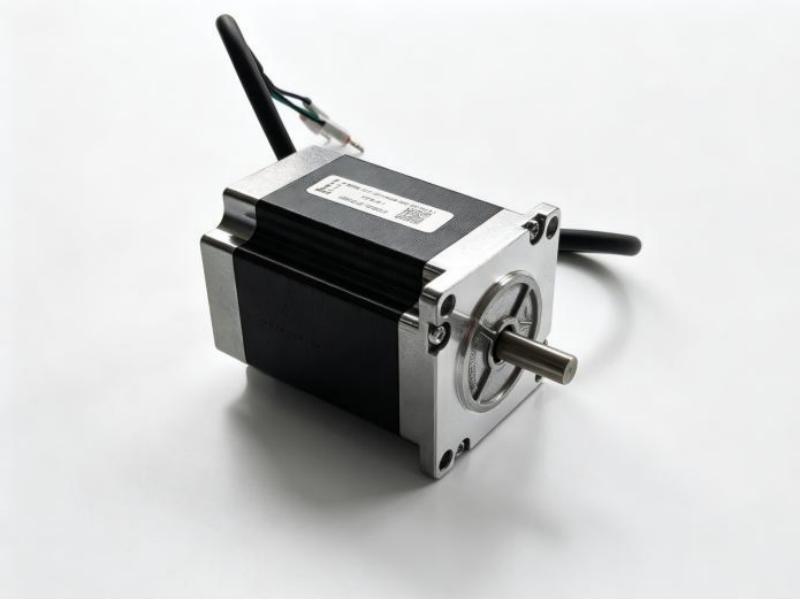
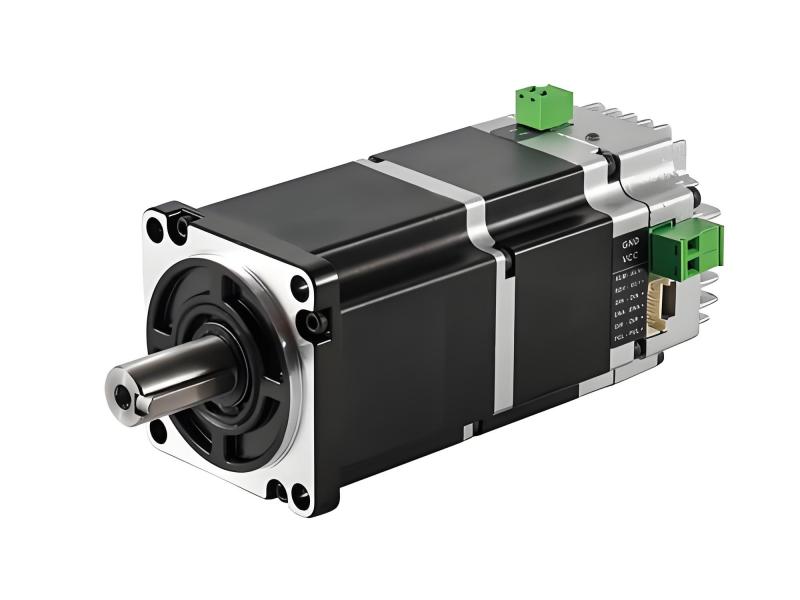
the stepping motor is like "walking by counting grids" receives one pulse and fixedly turns one step angle, holds position by reluctance, has no feedback, moves as much as sent, and the system does not confirm whether it actually arrived. Servo motor has an encoder, feeds back position in real time and dynamically adjusts current, equivalent to "walking with eyes watching", and it can compensate and correct even under sudden load changes. This is the most fundamental difference between the two. Precisely because of this, for processes with high positioning-consistency requirements, the closed-loop servo gives the operator more peace of mind. The open-loop solution saves the encoder cost, but leaves the uncertainty of 'whether it actually reached the position' to the process.
II. Precision and speed performance
stepping motor commonly has a step angle of 1.8°; after micro-stepping the precision is acceptable, but it easily loses steps at high speed and positioning stability drops; low-speed torque is large, suitable for constant-speed scenarios. Servo motor has high encoder resolution, stable torque across the full speed range, rated speed up to several thousand rpm, fast acceleration/deceleration response, suitable for rapid start-stop and high-dynamic tracking. Sofor high-speed high-cycle scenarios, almost only servo can be chosen. When selecting, leave enough margin for the rotation speed corresponding to the highest production takt; the torque-frequency characteristics of stepping determine that it is not suitable for occasions with frequent speed changes.
III. Cost and maintenance
Stepper systemsimple structure, long life; one set of motor plus driver costs about one-third to one-fifth of a servo; at low speed there is vibration and noise; acceleration/deceleration micro-stepping can improve it. Servoprice and maintenance cost are higher; encoder status needs attention, but it runs smoothly and quietly with relatively low heat generation, suitable for continuous production. If the production line needs to run continuously 24/7, the servo's low standby energy consumption and stability advantages become more pronounced; in the long run, the reduced defective-product losses from the servo often offset the price difference.
IV. How to choose a dispensing application
for low-to-medium speed, light load, limited budget, and simple trajectory dispensing, stepping is enough; for high-speed high-takt, precision trajectory, and large load fluctuation, servo is more stable. Specifically for dispensing machines, low-speed stable dispensing can use stepping, while high-takt or precision trajectory prioritizes servo. Bolli's BL series uses Leadshine servo with Xinsheng screw, closed-loop control plus precision transmission, balancing positioning stability and long-term consistency. For mixed-line production, it is safer to set the motor specification by the most stringent process.
V. A reminder on model selection
Selection looks at three indicators:speed, precision, load. Don't pay for unused high dynamics, and don't risk losing steps in high-speed scenarios to save money. Bring samples for a trial run before purchasing to confirm smooth start-stop and no step loss in the trajectory. Bolli provides unlimited remote after-sales; motor parameters and transmission matching can be guided online. When bringing samples for a trial run, it is recommended to observe both no-load and loaded states at the same time; stability under load change is the real performance.