 Bolli Automation specializes in vision dispensing machines_factory direct


Bolli focuses on Vision Fluid
BOLI, FOCUS ON VISION‑BASED FLUID DISPENSING
Search All
BOLI, FOCUS ON VISION‑BASED FLUID DISPENSING
Two-component adhesives (AB adhesive) rely on Agent A and Agent B must be mixed in proportion to cure, a bit off ratio, lightly slow cure and soft, heavily not cure at all. Manual mixing not only drifts ratio and bubbles more, but wastes labor. Bolli vision dispensing machine's dispensing system supports two-liquid valve scheme, making metering, mixing and application a continuous stable automation, the key being ratio control and mixing uniformity.
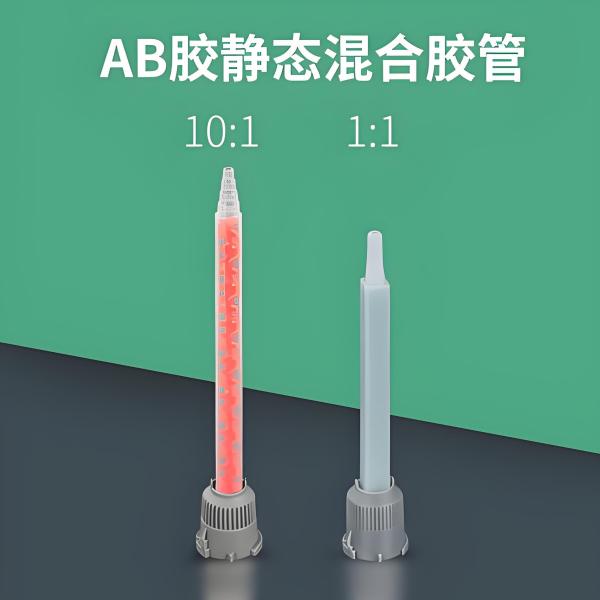
Two-component dispensing must first solve“dispense in proportion”. Bolli dispensing system supports standard two-liquid valves; A and B lines fed separately; metering by screw pump, gear pump or volumetric method;ratio accuracy directly determines curing quality. Taking common 1:1 or 10:1 ratios, pump output stability decides whether each drop's A/B ratio is consistent. Bolli whole-machine uses Leadshine servo drive feed, air pressure stable within 1200 hPa, providing stable feed pressure to the metering end, reducing ratio drift from pressure fluctuation.
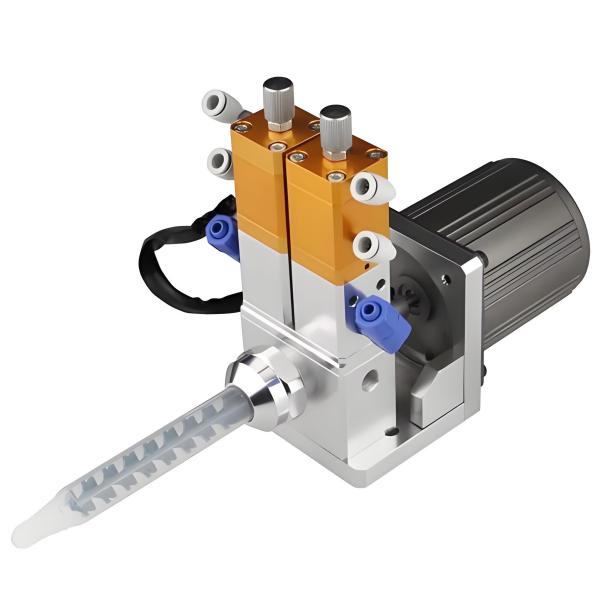
The two adhesive paths merge into a static mixing tube after the valve; the multi-layer baffle elements repeatedly cut, flip, and fold A and B, mixing uniformly after one pass, eliminating manual stirring and avoiding air bubbles. Two parameters for choosing a mixing tube:The more mixing sections, the more uniform the mix; the tube bore must match the dispensing flow. Bolli engineers recommend mixing-tube specs by adhesive ratio and single-point volume, ensuring consistent ratio from first to last drop, especially for potting and structural bonding requiring high mixing uniformity.
In actual production lines, ratio drift mostly comes from three places:
First, unstable feed pressure, inconsistent A and B air pressures;
Second, the viscosity difference between the two glues is too large, the lower-viscosity side flows faster;
Third, temperature drift, ambient or adhesive-temperature change thins one side. Bolli vision dispensing machine's stable air source and servo feed suppress the first two in hardware; in process, suggest same-temperature two adhesives and set warm-up stirring by adhesive, reducing difference at source.
Also look at ratio range vs metering-precision need: extreme ratios like 100:1 demand higher resolution and pump stability, easily accumulating tiny ratio errors; common 10:1, 1:1 are relatively easy to stabilize. Bolli engineers recommend metering method and pump specs by target ratio; the more extreme, the earlier to sample-verify.
when introducing two-component dispensing in a new project, first confirm curing with a small sample: dispense by set ratio, then mix and observe curing, confirm hardness and surface-dry time before batch. Evacuate line bubbles before dispensing, replace mixing tube by life to avoid old-glue residue cross-color and cross-ratio. Bolli provides free sample; bring real adhesive and workpiece to test, settling ratio, mixing-tube specs and dispensing parameters at once, reducing trial risk.
The core of two-component dispensing is stable ratio and uniform mixing, by two-liquid valve metering plus static mixing tube; ratio drift mainly from air pressure, viscosity difference and thermal drift. For new projects, first use Bolli vision dispensing machine free sample to settle ratio and mixing-tube specs most safely.For two-component dispensing solutions and sample machine testing, please contact Bolli: 13352947677.