 Bolli Automation specializes in vision dispensing machines_factory direct


Is the dispensing machine noisy? With national standard requirements and noise reduction methods
Many wonder whether a dispensing machine will be noisy in the workshop — the national standard answers clearly. GB/T 26799-2011 'General Specifications for Dispensing Machines' requires that noise under no-load operation not exceed 70 dB. The 2024 group standard for dual-five-axis high-precision smart dispensing machines (T/CASME) likewise caps no-load noise at 70 dB. What does 70 dB mean? Roughly normal speech or a busy street background — it will not harm operators' hearing or health.
Many people care whether the dispensing machine placed in the workshop is noisy; the national standard gives a clear answer to this question. The national standard GB/T 26799-2011 General Technical Conditions for Dispensing Machines clearly stipulates that the noise generated by the dispensing machine during no-load operation shall not exceed 70 decibels. The dual five-axis high-precision intelligent dispensing machine group standard (T/CASME) released in 2024 also requires no-load noise not exceeding 70 decibels. What does 70 decibels mean? It is roughly equivalent to the sound of normal conversation or the background noise of a busy street, and will not cause harm to operators' hearing and health.
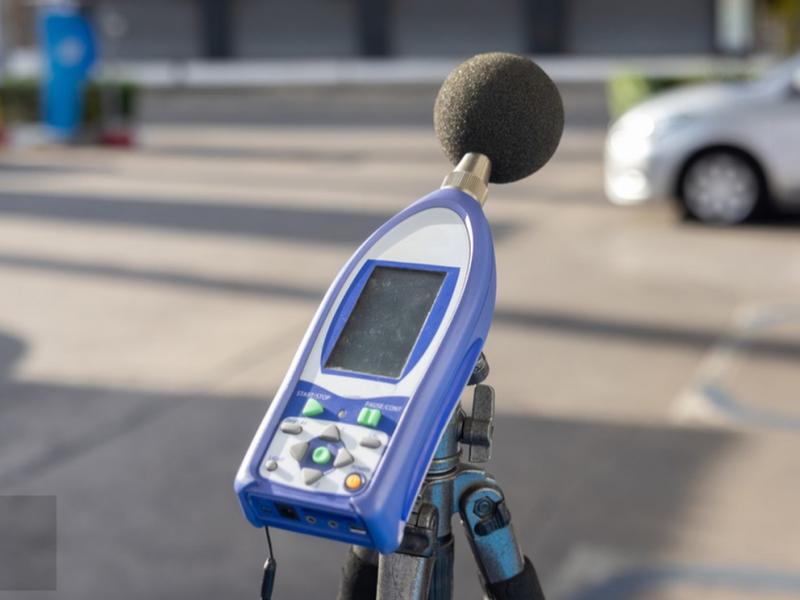
The standard covers no-load noise; loaded noise in production runs slightly higher
The national standard requires no-load noise; in actual production the noise of equipment under load is slightly higher. The dispensing machine's single-unit noise in an actual workshop is about 76 to 80 decibels; after reasonable layout and vibration/noise-isolation measures, the plant-boundary noise can be reduced to 55 to 60 decibels, meeting the limit of 65 decibels daytime for Class 3 sound-function zones in the 'Industrial Enterprise Plant Boundary Environmental Noise Emission Standard'. That is to say, a single dispensing machine's own noise is not loud, but if multiple units run simultaneously in the workshop plus, noise stacks up and needs treatment., etc., the overall noise will add up, requiring noise-reduction treatment.
Dispensing machine noise has three main sources.
The noise of the dispensing machine mainly has three sources.
: servo motors drive screws moving the XYZ axes at high speed; motor rotation and screw transmission both generate: a servo motor drives the lead screw to move XYZ three axes at high speed; both the motor's own operation and the lead-screw transmission producemechanical noiseSecond, the pneumatic system
: dispensing relies on compressed: the dispensing machine relies on compressed; solenoid valve switching, air pump operation and exhaust all produce airflow noise.dispensing; electromagnetic valve switching in the air circuit, air pump operation and exhaust all produce airflow noise.
: frame, worktable and sheet-metal housing may buzz in resonance during high-speed motion — especially obvious on poorly assembled small-shop machines.: the machine frame, worktable and sheet-metal housing may produce a resonant humming sound at high speed; this is especially obvious in poorly-assembled equipment from small factories.
Noise reduction can start from several angles.
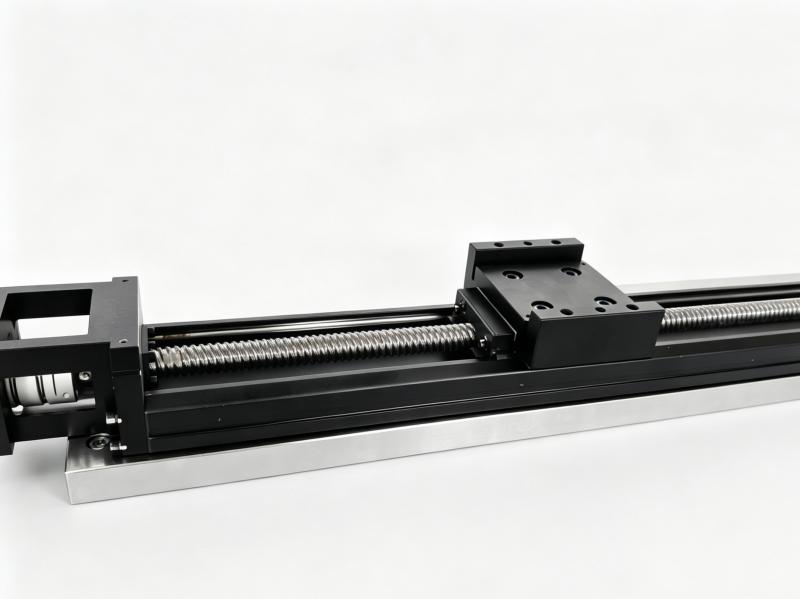
Noise reduction can be approached from several aspects.
: choose compliant products from reputable makers, and check forvibration-damping feet and sound-insulation foamvibration-damping feet and sound-insulating cotton。
: the machine base must be level and solid; adddamping padsto reduce structure-borne transmission; air pumps can be placed outside the workshop or fitted with silencers.Workshop level
: space machines sensibly, separate loud and quiet equipment into zones, and apply: lay out equipment spacing reasonably, place high-noise and low-noise equipment in separate zones, and apply to workshop walls and ceilingsManagement level. You can learn moreWhat Is the Motion Control Card in a Vision Dispensing Machine?。
At the management level: operators in high-noise areas should wearnoise-blocking earplugs, and moving parts should belubricated on scheduleto reduce abnormal noise.
5. Boli Machine Noise Performance
All Boli BL seriesvision dispensing machineAll machine models use lead-screw + servo-motor transmission, equipped with Shenzhen Xinsheng lead screws and Leadshine servo, power about 1500 to 2000 watts, voltage AC-220V, moving speed 800/500 mm per second. The equipment is compact and well-assembled; no-load noise meets national standards. When purchasing, you can confirm the noise index with the manufacturer, and if necessary conduct an on-site trial with a decibel meter to confirm it meets workshop noise requirements before ordering.
6. Summary
The national standard GB/T 26799 stipulates that the dispensing machine's no-load noise shall not exceed 70 decibels; actual loaded noise is about 76 to 80 decibels. Noise comes from three aspects: the motion system, the pneumatic system and structural resonance, throughpurchase compliant products, add damping pads, lay out rationally and lubricate regularly/ How to Maintain a Dispensing Machine?