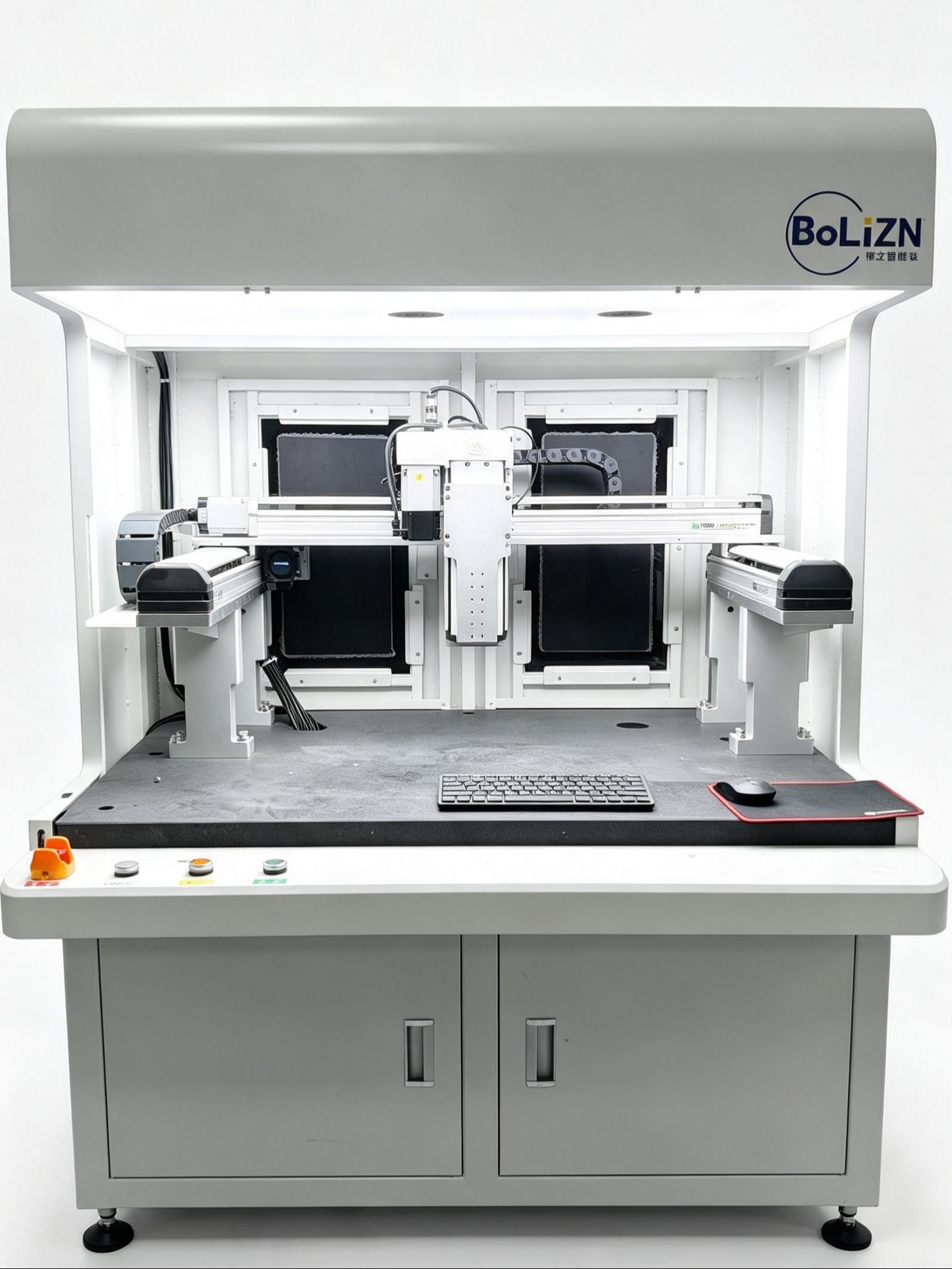
What Is the Difference Between a 4-Axis Rotary and a 3-Axis Dispensing Machine?
1. What Is the Essential Difference Between 4-Axis and 3-Axis Machines?
A 3-axis dispensing machine moves only alongX (left-right), Y (forward-back) and Z (up-down), with the needle always perpendicular to the table. A 4-axis rotary machine adds an R axis (rotation axis)that rotates continuously through 360°,, driving the product or needle along circular paths.Simply put: 3-axis is a 'Cartesian system' limited to right-angle paths; 4-axis adds the 'rotary dimension' for spiral and circular paths. That is the essential difference.
2. When Must You Choose 4-Axis Over 3-Axis?
Four situations make 4-axis a must:
Threaded product coating
- — screws, nuts and bolts need 360° even thread-lock adhesive; a 3-axis machine cannot trace a helical pathSide-surface dispensing
- — PCB edge sealing, cylindrical outer-wall coating; 3-axis can only shoot the top faceMultiple faces needing dispensing
- — 3-axis needs repeated re-clamping and flipping; 4-axis finishes in one clampingInner-wall or in-hole dispensing
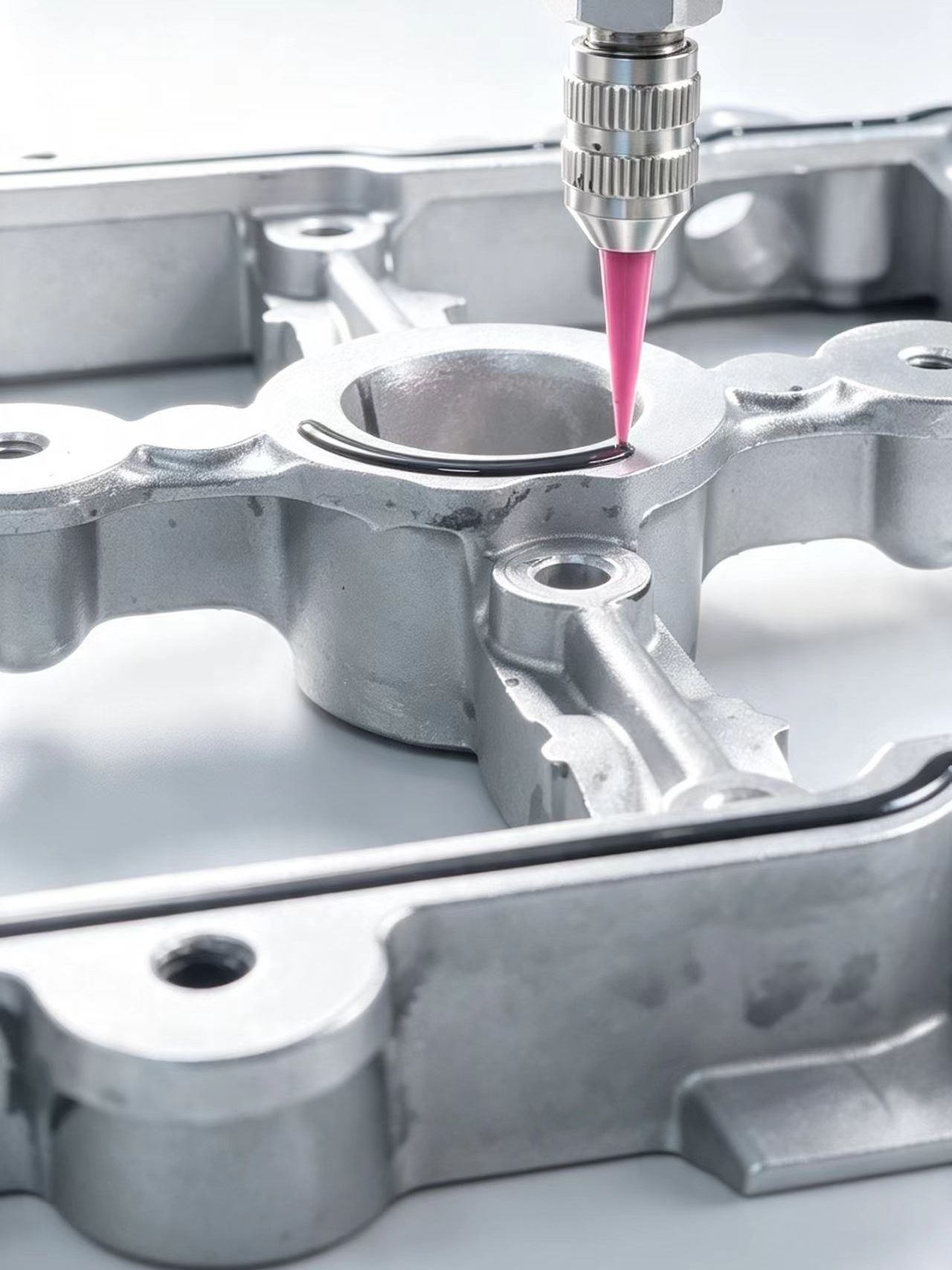
- — catheter fittings and bearing inner rings need the rotary axis with angled needle entryIf only the top face needs dispensing, 3-axis is fully sufficient — no need to spend extra on 4-axis. Learn more
3. How Accurate Is a 4-Axis Machine?What Products Can It Handle。
Boli Automation 4-axis models offer ±0.02mm positioning accuracy and ±0.01° R-axis rotation accuracy. The vision system with a 20MP CCD camera automatically detects angular deviation and compensates in real time — tilted or rotated products are corrected by the vision system itself, without relying on fixture precision or manual alignment as a 3-axis machine does. Learn more
4. Which Industries Use 4-Axis Machines?4-Axis Rotary Dispensing Machine。
Industry
| Typical Products | Dispensing Need | Hardware Fasteners |
|---|---|---|
| screws, nuts, bolts | 360° thread coating for anti-loosening and anti-leak | 3C Electronics |
| PCBs, connectors, coils | double-sided dispensing, side sealing | Automotive Parts |
| sensors, seals, harnesses | cylindrical outer-wall sealing | Medical Devices |
| catheter fittings, syringes | precision circumferential coating | Optical Components |
| lens assemblies, fiber connectors | micro-volume circular dispensing | 5. What Goes Wrong Forcing 3-Axis to Do 4-Axis Work? |
Operators must manually flip, reposition and re-fixture products — slow, and it introduces two core problems: re-clamping position error degrades accuracy, and repeated handling doubles labor steps and cost. For a screw needing front + side + thread dispensing, 4-axis finishes in one 20-second cycle; 3-axis needs three clampings and at least 60 seconds. Over a long production run, the extra 10-20k RMB price gap pays for itself in a few months of saved labor.
6. What Is the Configuration of Boli 4-Axis Machines?
Effective travel
- : X300-500mm / Y300mm / Z100mm / R 360°Platform material
- : natural marble, zero-stress and non-deformingVision system
- : 20MP CCD panoramic positioningPositioning accuracy
- : ±0.02mm / R-axis ±0.01°Control
- : Intel i7 industrial PC + Leadshine servoSupported processes
- : dotting, line drawing, coating, potting, thread coatingSample validation
- : Shenzhen Bao'an source factory, free sample testing with your materialsHow Does a Vision Dispensing Machine Automate a Production Line?