 Bolli Automation specializes in vision dispensing machines_factory direct


vision dispensing machine dual-valve dual-station selection
single-valve machine models are sufficient, but once output goes up, takt becomes the bottleneck. Some Bolli machine models support dual-valve configuration, dual-axis machine modelhas also been implemented. This article clearly explains what scenarios dual-valve dual-station suits, how much efficiency it improves, and the boundaries to watch when selecting.
I. Dual-valve is not as simple as "twice as fast"
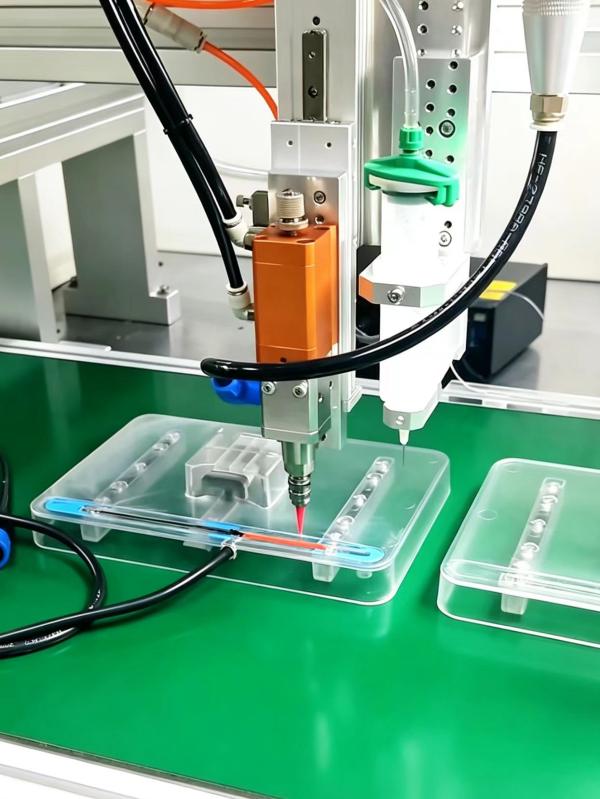
dual-valve means one machine is equipped with two dispensing units, which can operate simultaneously or coordinate operations. Its real value lies in “and line": symmetric parts are dispensed on both sides identically, two-component materials are metered separately, or the same workpiece is processed with different glue types in separate time slots. In Bolli's equipment documentation, the dual valve exists as an optional item, and is not standard on all machine models; it must be customized per requirement.
II. Typical scenarios suitable for dual-valve
First islarge-batch standard parts, the single-valve takt hits its ceiling and still can't keep up with the line speed;
second issymmetric or array workpieces, dual-valve synchronized dispensing at both ends saves half the movement;
third istwo-component products, A/B adhesive supplied through separate valves to avoid mixing contamination;
fourth isprocess requiring different adhesive types, the two valves each play their role.
Bolli supports combinations of time-pressure, jetting, and screw valve types, adapting to the above scenarios.
III. What new constraints dual-valve brings
dual-valve demands more from Vision and motion: dual-axis machines need separate calibration and needle alignment, and the program logic is more complex; the two adhesive-supply systems need independent pressure stabilization.Adding options increases cost— in the equipment documentation, "adding a valve" is listed as an optional paid item; the rule is each additional axis adds 5000 yuan; calculate the input-output before selecting options.
IV. The difference between dual-station and dual-valve
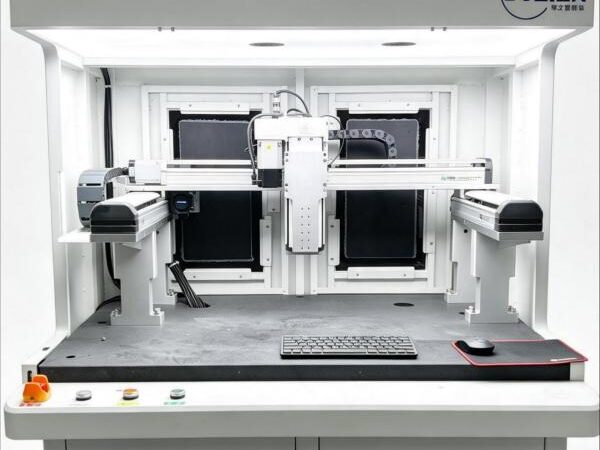
dual-station means two sets of fixtures/loading-unloading positions alternate operations, the equipment dispenses part A while the worker loads part B, reducing waiting; dual-valve makes the dispensing end parallel. The two can be stacked: dual-station solves "clamping waiting", dual-valve solves "dispensing serialization", and the combination can further improve efficiency. Bolli can customize combination solutions according to the production-line takt.
V. Decision suggestions
Firstcalculate the single-valve measured takt; only add dual-valve if there is a real gap, confirm whether the workpiece is truly symmetric/dual-component. Contact Bolli 13352947677 to provide you with an automated dispensing solution; unlimited remote after-sales can assist in evaluating the feasibility of the dual-valve solution.
dual-valve dual-station is suitable forlarge batch, symmetric parts, two-component or different-adhesive processes, compress the takt through parallel dispensing and alternating clamping; but it brings additional constraints on calibration, adhesive supply, and cost.