 Bolli Automation specializes in vision dispensing machines_factory direct


Bolli focuses on Vision Fluid
BOLI, FOCUS ON VISION‑BASED FLUID DISPENSING
Search All
BOLI, FOCUS ON VISION‑BASED FLUID DISPENSING
The process window refers to the parameter range that keeps product quality stably qualified, such as the respective upper and lower limits of dispensing pressure, adhesive temperature, motion speed, and glue volume. The wider the window, the stabler the batch; the narrower the window, the more a slight fluctuation causes defects. The key to upgrading the dispensing process from 'able to dispense' to 'stably dispensing' lies in understanding and setting this window well.
Every process parameter has an acceptableupper and lower boundaries, after multiple parameters are superimposed, a joint range that allows products to be qualified is formed; this is the process window. The width of the window directly determines the fault-tolerance of the production line:With a wide window, small fluctuations of equipment and environment are absorbed;The window is narrow; a slight deviation drops out of the qualified range。
Common constituent items includedispensing pressure, adhesive temperature, motion speed, dispensing height, single dispensing volume, and curing conditions. They constrain each other; for example, increasing pressure may cause stringing, while increasing speed may reduce dot diameter, so the window must be viewed as a whole rather than adjusting isolated single points.
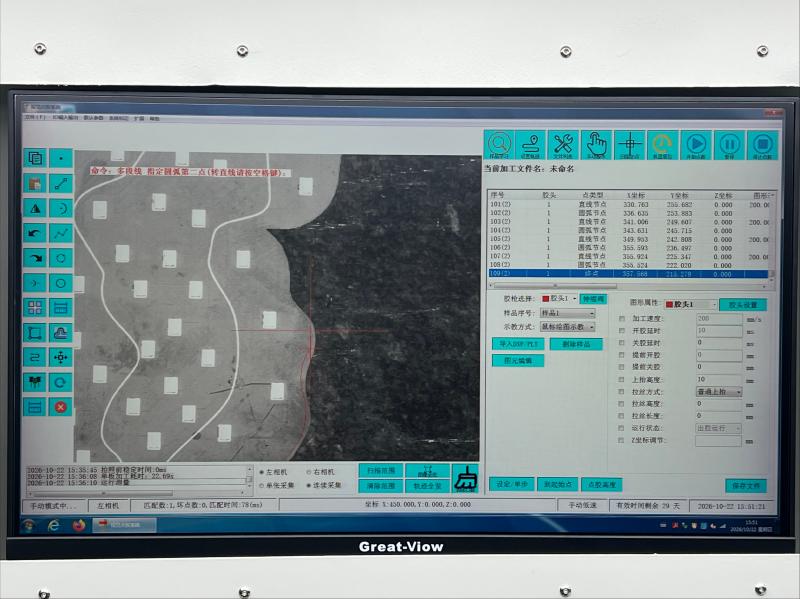
The approach is to apply to key parameterscomparative tests and small-batch ramp-up, record the boundaries of qualified and defective, then leave sufficient margin within the boundaries as the daily setting. Write the boundary data into the process card, and recheck against the card when changing personnel or batches, to avoid setting parameters from memory.
Firsttighten fluctuations at the input end: stabilize incoming materials, standardize adhesive thawing and mixing; thenimprove consistency at the equipment endity, e.g., using pressure-flow closed loop, temperature control and online inspection to reduce deviation; finallyincorporate key parameters into SPC monitoring, to detect drift in time. A narrow window is often not a single-point problem, but the concentrated manifestation of whole-chain fluctuation.
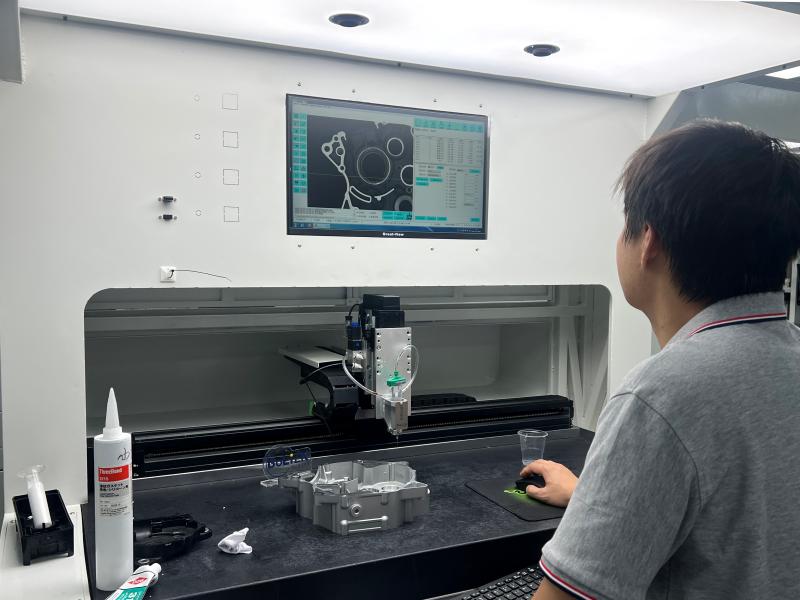
Bolli's vision dispensing machine can combine withpressure-flow closed loop, temperature control, and online inspectionetc. approaches to widen the process window, making the qualified range more stable and wider; Bolli provides unlimited remote training and can assist customers in process verification at the sample stage, clarifying the window boundaries before scaling up.
First isset only single-point parameters without setting a range, any fluctuation leads to defects;
second isuse experience values directly without verifying boundaries, it becomes invalid once the workpiece is changed;
Third, it is toequipment capability as process capability, ignoring the contribution of incoming materials and the environment.
The process window must be verified under real production-line conditions, rather than staying at theoretical values.
The dispensing process window is the key to upgrading the vision dispensing machine from 'able to dispense' to 'stable dispensing'; a wide window means strong fault tolerance and fewer defects. If you need to verify the process-window boundaries with your workpiece and adhesive, please contactBolli Automation Co., Ltd.13352947677, with engineers assisting in sample testing and process confirmation.