How Many Workers Can a Vision Dispensing Machine Replace?
'How many workers will one machine save me?' — the question factory owners and buyers ask most. There is no one-line answer: replacement count depends on product type, dispensing complexity and line takt. But industry practice gives a reference range: one vision dispensing machine typically replaces 3 to 5 skilled dispensing operators. This article walks you through the math.
1. What Industry Practice Says About Replacement Count
Across multiple vendors and industry sources, one automatic dispensing machine's daily output equals the manual output of 4-6 skilled workers, and is generally accepted to replace 3-5 workers. More important is the 'one operator, several machines' model: an automatic machine runs 24 hours with just one operator supervising 3-5 machines, handling loading, parameter checks and routine care. Versus the traditional one-person-one-machine setup, labor input drops 60%-80%. Learn moreproduction line automation。
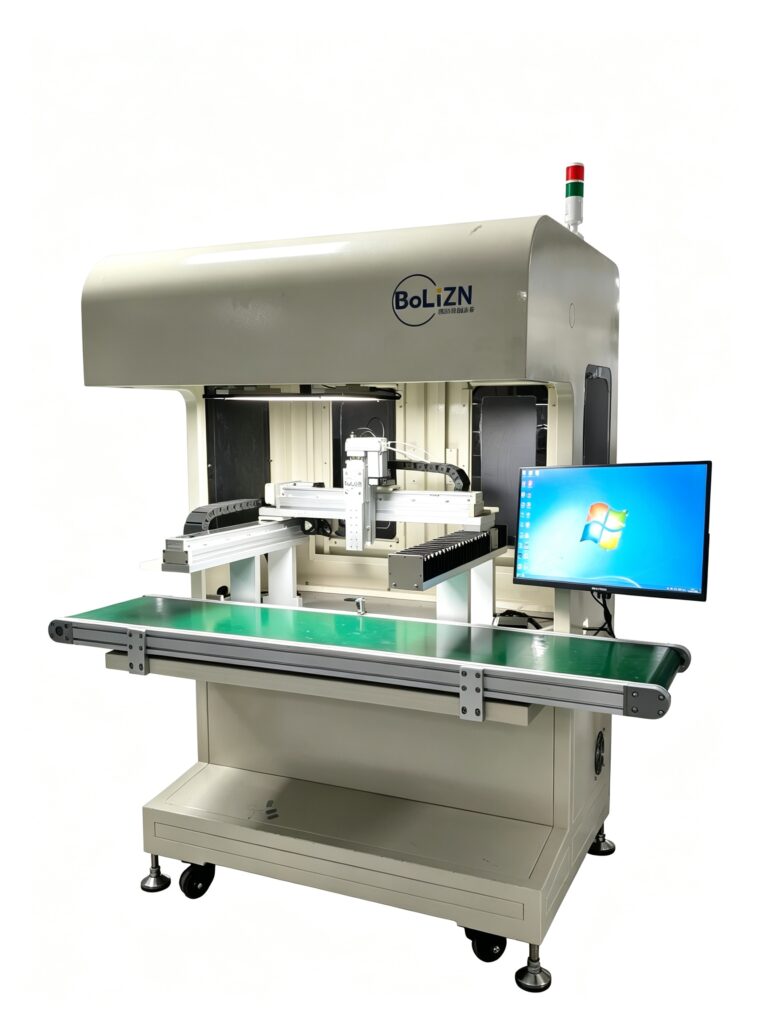
2. It Replaces Not Just Labor Quantity, but Quality
Manual dispensing suffers from mood, fatigue and skill variance — uneven volume, missed dots, overflow — with reject rates typically 5%-10%. Vision dispensing machines control volume and path by program, keeping rejects below 1%. Industry reports cite an automotive electronics plant whose daily output rose from 800 to 3500 pieces after automating, with rejects falling60%by more than 90%. Beyond direct replacement, the machine alsocuts the hidden labor and material waste of rework
— precision dispensing reduces adhesive waste by 30%-50%, returns that are easy to miss when counting only 'workers replaced'.
3. How to Calculate the Payback PeriodPayback depends on three variables — machine investment, workers replaced and labor cost. Typical payback for automatic dispensing runs 6-12 months. Take a Pearl River Delta operator at 5,000 RMB/month: a machine replacing 3 workers saves about 180,000 RMB a year; with yield gains and adhesive savings, payback shortens further. High-precision, high-volume users can recover costs in 3-6 months; businesses with volatile orders usually within 1.5 years. Learn more。
price ranges
4. Deeper Value Beyond Labor Replacement
First,Beyond direct labor savings, automated dispensing delivers several hidden gains.Less dependence on skilled workers
Second,: traditional operators need 1-3 months of training before working solo, while machine operation takes 1-2 weeks — staff turnover no longer derails production.Traceable production data
Third,: the machine logs dispensing parameters and output per batch, supporting process optimization and quality control.Greater production flexibility
5. Summary
: a vision dispensing machine generates paths automatically from product drawings, responding quickly to small, varied orders — faster than retraining people.One vision dispensing machine typically replaces 3-5 workers with a 6-12 month payback — but the real return goes beyond headcount:higher yield, adhesive savings, reduced dependence on skilled labor and traceable production data matter just as muchWhat Are a Vision Dispensing Machine's Site Requirements?。