How to Choose a Camera Lens for a Vision Dispensing Machine?
Many buyers focus only on camera resolution when choosing a vision dispensing machine and overlook the lens —yet the lens is the key link that determines imaging quality. The same camera with a mismatched lens can produce blurry, dark or vignetted images. Lens selection has four core parameters:focal length, field of view, aperture and mount. Understand their relationship and you can judge whether a vendor's configuration is sound.
1. Focal Length, Field of View and Working Distance Are Linked
The core rule of lenses fits in one sentence:at a fixed working distance, a longer focal length gives a smaller field of view with finer detail; a shorter focal length covers a wider field but resolves less detail.Industry lens guides summarize: longer focal length sees farther and finer; shorter sees wider. A rough formula: focal length ≈ sensor size × working distance ÷ field of view. For example, at a 500mm working distance covering a 100mm-wide workpiece with a 1-inch sensor, the estimated focal length is about 50mm — pick the nearest standard prime lens. In practice you rarely need to compute this yourself: on the Boli BL series, lenses and cameras are factory-matched per model, so users only confirm the field covers the product.
2. Balancing Aperture and Depth of Field
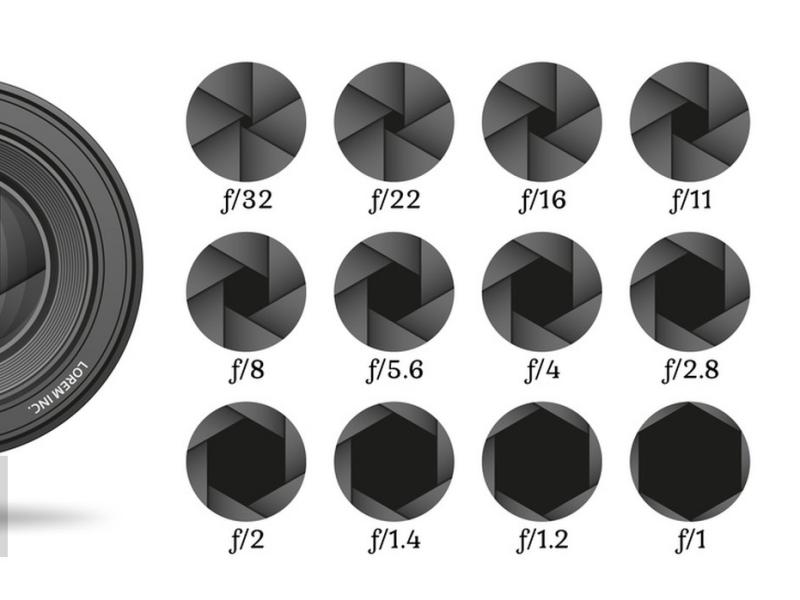
Aperture is expressed as an F-number.A smaller F-number means a larger opening, more light, but shallower depth of field; a larger F-number deepens depth of field for an all-sharp but darker image. If the dispensing surface has height variation, you need enough depth of field to keep the whole area sharp. Field practice prioritizes depth of field — stop down to common values like F8 or F11 first; if the image darkens, add light intensity rather than cranking up camera gain, which amplifies noise.
3. Sensor Coverage and Mount Must Match
Two things on the lens must match the camera: sensor coverage and mount. Coverage refers to the lens image circle diameter, which must be no smaller than the camera sensor diagonal, or the frame corners darken or black out. Industry guidance: a 2/3-inch camera needs a lens with coverage of at least 11mm. On mounts, the common industrial C-mount flange distance is 17.526mm and CS-mount 12.5mm; a C-mount lens on a CS-mount camera needs a 5mm extension ring. Mismatched mounts cause focus failure and edge blur. Machine-vision practice strongly favors prime lenses — stable and repeatable; zoom lenses suit only R&D and testing.
4. Resolution Must Match the Pixels
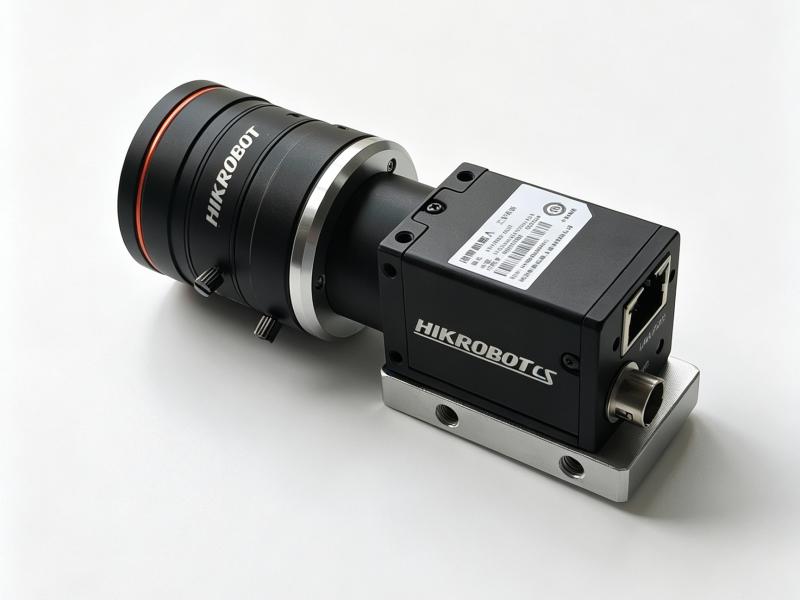
Another easily overlooked metric is lens resolving power, in lp/mm. If the lens cannot resolve, the camera's pixel advantage is wasted — a high-resolution camera demands a high-resolution lens. Industry technical articles note that lens resolution should follow the sampling-match principle with camera pixel size so neither becomes the system bottleneck. The Boli BL series combines Hikvision industrial cameras with custom lenses, offering 5MP, 12MP and 20MP tiers per model, with coverage and mounts matched as a set and calibrated at the factory — users need only confirm the pixel tier and that the field covers the product.
5. Summary
Lens selection comes down to four things —focal length sets field of view and detail, aperture sets depth of field and brightness, sensor coverage and mount determine fit, resolving power determines whether the camera is fed properly. When selecting a vision dispensing machine, first confirm the lens matches the camera and the field covers your product; leave the rest to the vendor's matched solution.