 Bolli Automation specializes in vision dispensing machines_factory direct


How to Solve Common Quality Defects of Dispensing Machines?
dispensing yield directly determines product quality, but in actual production it oftenencounters stringing, dispensing interruption, overflow, and misalignmentfour types of problems. Their causes are not the same, nor are their solutions. Combined with Bolli's equipment valve body and vision configuration, you can troubleshoot targetedly and avoid detours.
I. Stringing: A Thin Filament Is Dragged Out at the End
Stringing is when the adhesive is pulled into a thin filament as the needle lifts, often due to strong fluidity of the adhesive and untimely shutoff. The countermeasure is to enablesuction-back function or switch to a suction-back valve, generating negative pressure at the moment of lifting the pen to retract the residual glue; at the same time, appropriately increase the lift height and optimize the glue-retraction parameters. Bolli's suction-back valve is designed precisely to prevent dripping and glue breakage, and is effective for such scenarios.
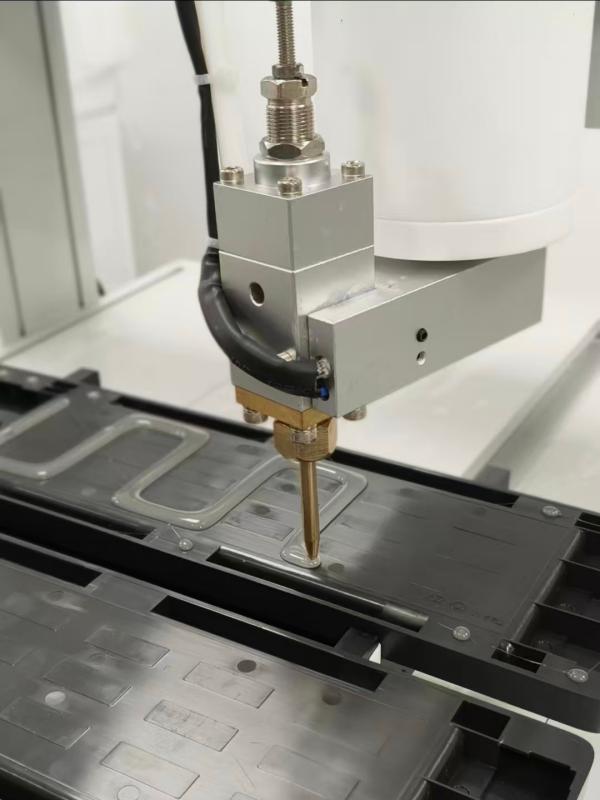
II. Dispensing Interruption: The Line Is Not Continuous
Dispensing interruption manifests as breaks in what should be a continuous adhesive line, often due to insufficient glue supply pressure, high glue viscosity, or slow valve body response. Check whether the air pressure falls within the equipment's applicable range of 600-1200 hPa, and appropriatelyraise temperature to lower viscosity, or switch to a faster-response valve body; for micro-precision line widths, piezoelectric valve electric-drive dispensing is stable, suitable for workpieces requiring continuous and fine output.
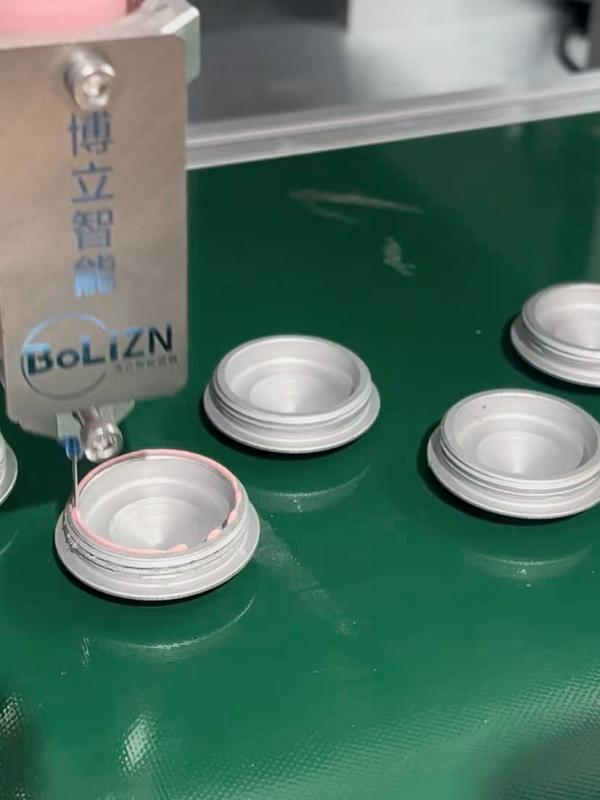
III. Overflow: Excess Adhesive Spills Out
glue overflow occurs when a single dispensing volume exceeds the requirement and spreads outward, stemming from excessive air pressure, prolonged dispensing duration, or an unsuitable needle bore. You shouldlower the air pressure and dispensing volume, and reduce the needle inner diameter, and reset the timing according to glue characteristics. Standard valve bodies such as needle valves and suction-back valves, combined with parameter calibration, can keep the single-point volume within a reasonable range.
IV. Misalignment: Points Are Not Accurately Positioned
misalignment means the glue landed at the wrong position; the root cause is mostly in calibration and needle alignment. After changing the needle or moving the glue head, you must re-align the needle; changes in incoming workpiece materials require re-calibration; inaccurate vision recognition also causes misalignment—at this point, check Bolli's self-developed light source and Hikvision camera imaging. Bolli provides unlimited remote debugging to help locate the root cause of misalignment.
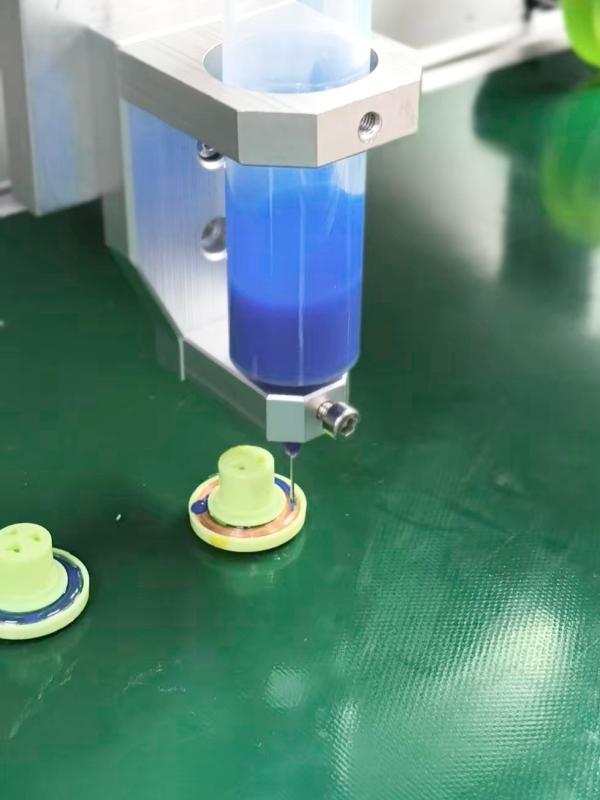
V. Use Sampling to Address Problems Upfront
Most defects are exposed during the sampling stage. It is recommended to get free sampling from Bolli before formal mass production, running it with real workpieces to verify stringing, glue breakage, overflow, and misalignment one by one and solidify parameters. After mass production, stable output is achieved by following the calibration maintenance. Contact Us 13352947677, providing you with a free automated dispensing solution.