 Bolli Automation specializes in vision dispensing machines_factory direct


Bolli focuses on Vision Fluid
BOLI, FOCUS ON VISION‑BASED FLUID DISPENSING
Search All
BOLI, FOCUS ON VISION‑BASED FLUID DISPENSING
The soldering iron tip is the only thermal interface between the automatic soldering machine and the workpiece; its shape and size directly determine heat transfer efficiency, solderable points and solder joint consistency. Based on public welding data, this article objectively sorts out the selection principles of soldering iron tip shape and size and their impact on welding quality, avoiding subjective speculation and exaggeration.
Soldering iron tip selection should be based on“contactable metal area”and “component density”as the standard, not the package name. For two through-hole connectors, if one pad connects to an inner ground plane and the other is isolated, the thermal performance is completely different. The common practice:First use the largest working face that can be safely placed on exposed metal (chisel, bevel or knife shape), then directionally contact both sides of the pins and pads.
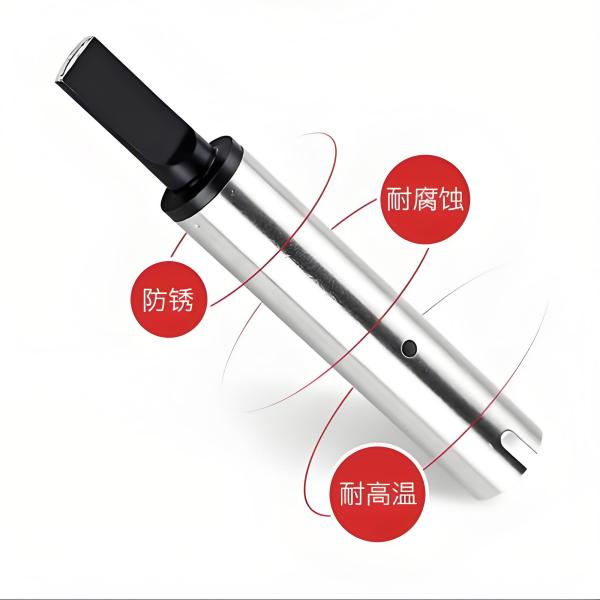
conical (sharp cone) fine tip, suitable for narrow spaces and isolated tiny pads, but with a small contact point; when connected to large copper foil, heat dissipates quickly and heat replenishment cannot keep up.chisel shape (flat / screwdriver) flat working face can simultaneously reach pins and pads, short thermal path, a common starting point for through-hole components, connectors and wires.bevel / hoof (bevel/hoof) beveled surface can hold a small solder pool, suitable for drag soldering of multi-pin rows, but excessive solder volume easily causes bridging.knife shape (K-type) long working edge, suitable for pin rows and rework;The bent type moves the work point away from the handle axis line, used for hidden points under connectors, etc.
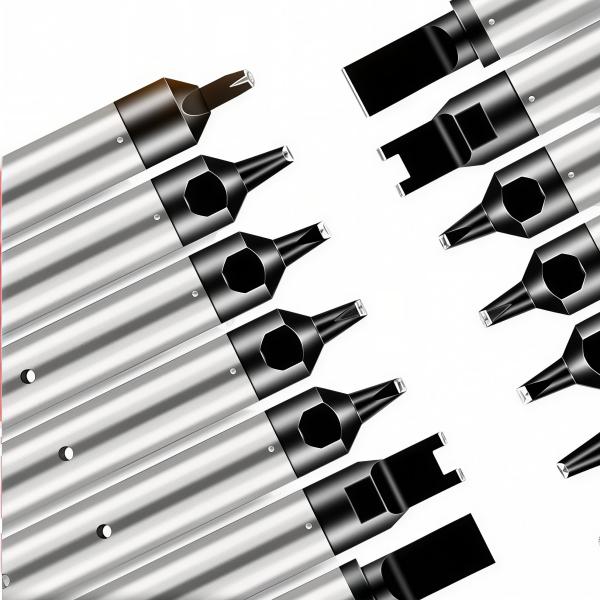
Soldering iron tip diameter range is approximately 0.2mm (needle tip) to over 6mm (large chisel / hoof). The wider the working face, the larger the contact area and thermal mass, for high thermal capacity solder joints (shield can, thick terminals, heavy gauge wire) the faster the heating, the better the continuous welding thermal recovery; but too large will hit adjacent plastic, solder mask or components. The principle is to balance between ”the largest face that fits” and ”not hitting neighboring parts”; the gap is a hard constraint.
Contact area too smallwill cause insufficient heat transfer; the solder melts on the soldering iron tip but does not wet the board, leaving a cold solder joint risk;Improper geometrywill cause uncontrolled solder volume during drag soldering and cause bridging;Size too largemay cause adjacent plastic to soften and cause thermal damage. Correct geometric matching can achieve wetting at lower temperature and shorter contact time, indirectly reducing dependence on temperature and time.
on the automatic soldering machine,Soldering iron tip selection must be coordinated with solder feeding, temperature control and motion path: solder-breaking feed reduces splashing, automatic cleaning maintains good tinning on the soldering iron tip, and teach programming stabilizes points. Taking Bolli 5331 dual-station soldering machine as an example, its operating range X axis 500mm, Y1/Y2 axis each 300mm, Z axis 100mm, maximum speed 500mm/s (customizable above 800mm/s), repeat positioning accuracy ±0.02–0.05mm; actual solder joint quality must still be based on sample testing verification.
Soldering iron tip geometry and temperature are two independent variables. The temperature window is detailed in the ”Temperature and Tact” article (lead-based recommended 315–340°C, lead-free SAC305 recommended 350–380°C, per IPC J-STD-006 / IPC-A-610 process window); here we only emphasize: with proper geometry, it is often possible to usecomplete soldering at lower temperature, thereby reducing wear on the soldering iron tip plating。
The essence of soldering iron tip selection is ”matching shape and size by contactable metal area”: shape determines the thermal path and solderable points, size affects thermal mass and avoidance. Bolli, on the 5331 dual-station soldering machine, uses a self-developed control system to link high-frequency temperature control, solder-breaking feeding and automatic cleaning, providing equipment and sample testing support for 3C, automotive electronics, connectors and other precision soldering scenarios; for specific process verification and selection communication, please contact Bolli Automation Co., Ltd. 13352947677.